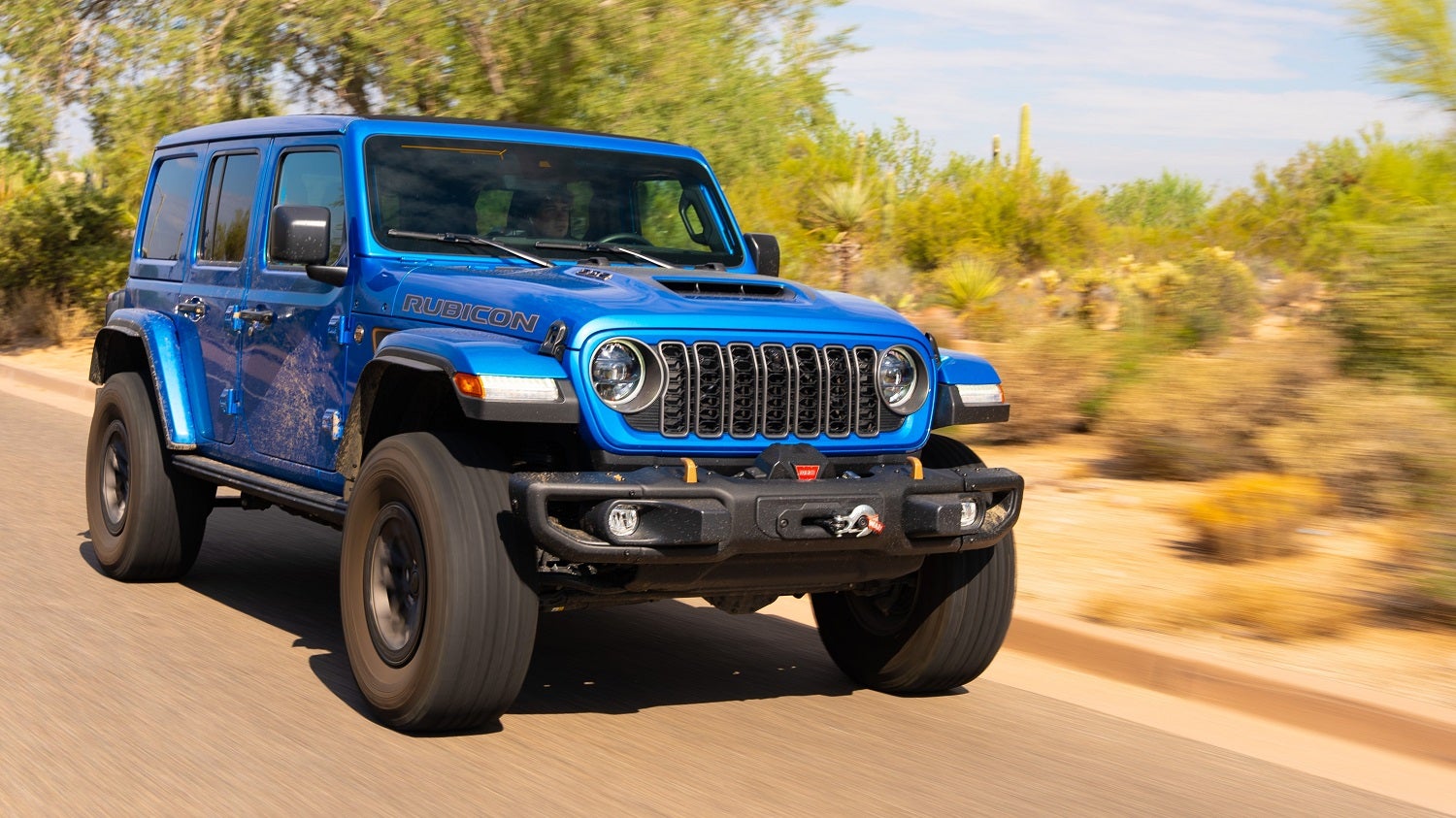




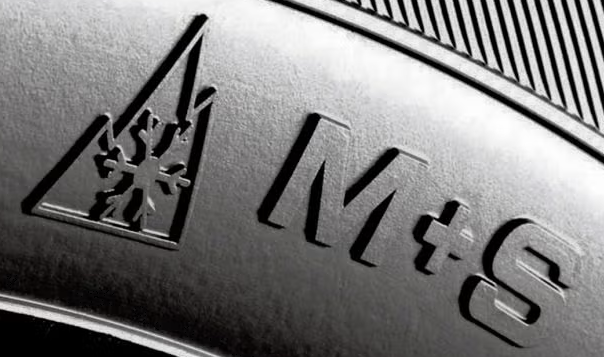
Your tires are the only part of your vehicle that actually touches the road. Every time you accelerate, brake or turn, four patches of rubber about the size of your hand are doing all the work. That's why the right tires can make a bigger difference in winter than four-wheel drive, all-wheel drive or any electronic safety feature. But with all-season, winter, all-terrain and all-weather tires all on the market, choosing the right set can be confusing. The short answer All-season tires are a good everyday choice for most Kansas City drivers on plowed roads. Winter tires give the best grip on snow and ice and the shortest stopping distances once temperatures drop below about 45°F. All-terrain tires are built for gravel, mud and trails, and many also carry the three-peak mountain snowflake symbol for severe snow. The right choice depends on where you drive, how much you drive in bad weather and whether your Jeep or Ram sees off-road use. In this guide, we'll explain how each tire type works, what the symbols on your sidewall really mean, how Kansas City winters affect your choice and which tires make the most sense for popular Jeep, Ram, Dodge and Chrysler models. Whether you commute from Lee's Summit to downtown, live on a gravel road near Lone Jack or take your Wrangler off-road on weekends, you'll know what to look for before your next tire purchase. The Four Main Tire Types at a Glance Tire type Best for Strengths Tradeoffs All-season Year-round driving on paved, mostly plowed roads Quiet, comfortable, long-lasting, good in rain and light snow Less grip in deep snow, on ice and in very cold temperatures Winter Cold weather, snow, slush and ice Best cold-weather grip, shortest winter stopping distances Wear faster in warm weather; usually swapped seasonally All-terrain Trucks and SUVs that see gravel, dirt, mud and trails Tough construction, off-road traction, many rated for severe snow Can be louder and less efficient; less ice grip than winter tires All-weather Drivers who want one tire for all four seasons with stronger snow ability Severe-snow rated, can stay on year-round Not as strong as dedicated winter tires in the worst conditions All-Season Tires: The Everyday Choice All-season tires are what most cars, minivans and many SUVs come with from the factory. They're designed to balance comfort, low noise, long tread life and good wet-road grip, with enough snow traction for light winter conditions. Where all-season tires work well Daily commuting on plowed streets and highways Rainy spring and fall days Light snow and slush on main roads Drivers who want one set of tires all year Where they fall short All-season tires are a compromise. Their rubber is designed to handle summer heat, which means it gets firmer in the cold. Michelin explains that when temperatures drop below 45°F, all-season and summer tires begin to harden. Harder rubber doesn't grip as well, especially on ice and packed snow. All-season tires also don't have as many biting edges as winter tires, so deep snow can pack into the tread. For many Kansas City drivers who stay on main roads, a quality all-season tire with plenty of tread is enough. But if you have to drive early in the morning after a storm, live on a hilly or unplowed street or simply want the most confidence possible, consider an upgrade. Winter Tires: The Cold-Weather Specialist Winter tires, sometimes called snow tires, are built for one job: grip in cold, snowy and icy conditions. Michelin describes three key differences: Soft rubber compounds that stay flexible in freezing temperatures instead of hardening. Lots of sipes, tiny slits across the tread that create extra biting edges on snow and ice. Deeper, more aggressive grooves that clear snow and slush out of the tread. How much difference do winter tires make? A lot. In Consumer Reports' snow testing, an all-wheel-drive SUV on all-season tires took almost 700 feet to stop from 60 mph. On new winter tires, both that SUV and a front-wheel-drive sedan stopped in about 300 feet. Consumer Reports concluded that winter tires matter more than all-wheel drive in many situations and recommends four winter tires for any vehicle, whether it's front-, rear- or all-wheel drive. The tradeoffs Seasonal swaps: Winter tires are meant for cold weather. Their soft rubber wears faster on warm pavement, so most drivers switch back to all-season or summer tires in the spring. Storage: You'll need space to store the off-season set, or ask your tire shop about storage options. A second set of wheels: Many drivers mount winter tires on their own wheels to make seasonal swaps quicker and easier. Studded winter tires in Missouri Some winter tires can be fitted with metal studs for extra ice grip. According to the Missouri State Highway Patrol, studded tires are prohibited on Missouri roads from April 1 through November 1 under state law, so they can only be used during the winter months. Most Kansas City drivers find that modern studless winter tires offer plenty of ice grip without the road noise and seasonal restrictions. All-Terrain Tires: Built for Jeeps and Trucks All-terrain tires are designed for vehicles that split their time between pavement and dirt. You'll find them on many Jeep Wranglers, Gladiators and Ram trucks, especially off-road trims. For example, the 2026 Jeep Wrangler Willys 392 comes standard with 35-inch BFGoodrich KO2 all-terrain tires. What makes them different Tougher construction with stronger sidewalls that resist cuts and punctures from rocks and gravel Open, chunky tread blocks that grip loose surfaces and clean out mud Better load capacity for trucks that haul and tow How do all-terrain tires do in snow? It depends on the tire. Tire Rack notes that many all-terrain tires carry the three-peak mountain snowflake symbol, which means they've passed a standardized snow traction test. Those tires can be quite capable in deep snow, and combined with four-wheel drive and good ground clearance, they make Jeeps and Rams very confident on snowy rural roads. The limitation is ice. All-terrain tires usually use firmer rubber than winter tires, so on glare ice they can't match a dedicated winter tire. Tire Rack cautions that snowflake-rated all-season and all-terrain tires can't match winter tires in every winter condition. The tradeoffs More road noise than highway or all-season tires Often a small hit to fuel economy because of extra weight and rolling resistance A slightly firmer ride on the highway For many Jeep and Ram owners, those tradeoffs are worth it for the extra capability and the rugged look. All-Weather Tires: The Middle Ground All-weather tires are a newer category that sits between all-season and winter tires. They carry the three-peak mountain snowflake symbol for severe snow, but they're designed to stay on your vehicle all year instead of being swapped seasonally. They're a good option for drivers who want better winter grip than an all-season tire without managing two sets of tires. Like all-terrains, they can't fully match a dedicated winter tire on ice or in the harshest conditions. A Quick Word About Summer and Performance Tires Some performance vehicles come with summer or high-performance tires. These use rubber compounds designed for maximum grip on warm, dry and wet pavement, and they're fantastic in July. In cold weather, though, that rubber hardens even more than an all-season tire's, and many summer tires aren't meant to be driven in snow or freezing temperatures at all. If you own a performance car with summer tires and plan to drive it through a Kansas City winter, a set of winter tires is the safest way to do it. Check your tire manufacturer's guidance on cold-weather use and storage. Reading Your Tire's Sidewall: M+S vs. the Snowflake Two winter-related markings show up on many tires, and they don't mean the same thing. M+S (mud and snow) Tire Rack explains that the M+S marking is based only on the tire's tread pattern geometry. It doesn't require any performance test in snow. Many all-season tires carry M+S. Three-peak mountain snowflake (3PMSF) This symbol, a snowflake inside a mountain with three peaks, means the tire passed a standardized test on medium-packed snow. To earn it, a tire must reach a traction index of at least 110 compared with a standard reference tire rated 100. In other words, it accelerates on snow at least 10% better than the reference tire. Tire Rack notes one important limitation: the test only measures acceleration traction on packed snow. It doesn't test braking, cornering or ice grip. So a snowflake-rated all-season or all-terrain tire is a step up for winter, but it isn't the same as a true winter tire. Other sidewall information to know Tire size, like 275/55R20, shows the width, sidewall height ratio and wheel diameter. Load index and speed rating must meet your vehicle's requirements. Check your owner's manual or the tire placard in the driver's door jamb. The DOT date code shows the week and year the tire was made. Older tires can lose grip even with plenty of tread. Tread Depth: When It's Time for New Tires Even the best tire loses grip as its tread wears down. Tire Rack's guidance: 2/32 of an inch is considered legally worn out in most states. 4/32 of an inch is when Tire Rack suggests considering replacement if you drive in rain often. In Tire Rack's testing, tires at 2/32 needed about 100 more feet to stop from 70 mph on wet roads than tires at 4/32. About 5/32 of an inch is when Tire Rack suggests replacement if you drive in snow, because snow and slush traction drops off as tread gets shallower. The classic penny test, where you check whether Lincoln's head is covered, only tells you whether you're near the legal minimum. By then, your winter traction is long gone. A tread depth gauge costs a few dollars, or our service team can measure your tread during any visit. Other signs you need new tires Cracks in the sidewall or tread, which can come from age and sun exposure Bulges or blisters on the sidewall, which can mean internal damage and a risk of failure Uneven wear, such as one edge wearing faster than the other, which can point to alignment or suspension issues Vibration at highway speeds that wasn't there before Repeated pressure loss or a tire that needs air more often than the others Age, since rubber hardens over time even when tread looks good. Check the DOT date code and ask a technician to inspect older tires. Which Tires Are Right for Your Jeep, Ram, Dodge or Chrysler? Jeep Wrangler and Gladiator Many come with all-terrain tires, especially off-road trims. If yours carry the snowflake symbol, they'll handle most Kansas City winters well, especially with four-wheel drive. If you drive a lot on icy roads, a set of winter tires for the coldest months adds a lot of stopping confidence. Jeep Grand Cherokee, Compass and Wagoneer These usually come with all-season tires. Paired with Jeep's 4x4 systems, they work well for most winter commuting. For families who drive early mornings, unplowed roads or icy hills, winter tires or all-weather tires are a smart upgrade. Ram 1500, 2500 and 3500 Trucks may come with all-season or all-terrain tires depending on the trim. Pickups have a light rear end when the bed is empty, so tire choice matters a lot in snow. All-terrain tires with the snowflake symbol are a popular choice for truck owners who drive rural roads or job sites. If you tow in winter, make sure your tires' load rating matches your truck's requirements. Dodge Charger and Durango Performance vehicles may come with high-performance tires designed for grip on warm, dry pavement. Check your sidewall and owner's manual. If your tires aren't rated for snow, winter tires let you enjoy the Charger's standard all-wheel drive year-round. The Durango's AWD models pair well with all-season or winter tires for family winter driving. Chrysler Pacifica The Pacifica usually comes with all-season tires. For families who drive to school and practices no matter the weather, winter tires or all-weather tires add confidence, especially on AWD models. What Kansas City Winters Mean for Your Tires Kansas City winters bring a mix of snow, sleet, freezing rain and cold, dry days. January is usually the coldest month, with average lows around 24°F. That has a few practical effects: Cold temperatures are common even on days without snow, which is exactly when winter tire compounds help most. Ice and freezing rain are often a bigger danger than deep snow, and that's where winter tires shine. Hills and side streets in Lee's Summit, Blue Springs and Independence can stay slick long after highways are clear. Rural roads around Lone Jack, Pleasant Hill and Greenwood may stay snow-covered longer, which favors snowflake-rated all-terrains or winter tires. A good rule of thumb for the metro: install winter tires in mid to late November, as Kansas City's cold season settles in and temperatures spend more and more time below 45°F, and switch back in spring once temperatures warm up and the risk of snow passes. Winter Tire Care Tips Install them as a set of four. Consumer Reports recommends four winter tires, not two. Mixing tire types can make the vehicle unpredictable in a skid, and matching tires matter for AWD and 4WD systems. Check tire pressure often. As a rule of thumb, tire pressure drops about 1 to 2 PSI for every 10-degree drop in temperature. Fill to the pressure on your door placard. Rotate regularly to keep wear even, following your owner's manual. Check the tire pressure monitoring system when you swap seasonal sets, especially if you use a separate set of wheels. Store off-season tires properly, in a cool, dry place away from sunlight. Tires are only part of winter readiness. Check out our guides to 4WD vs. AWD in snow and ice and the 7 signs your car battery is dying. Frequently Asked Questions Do I need winter tires in Kansas City? Many Kansas City drivers do fine with good all-season or snowflake-rated all-terrain tires. Winter tires are the best choice if you drive often in snow and ice, travel early before roads are treated or live on hilly or unplowed streets. They offer the best grip and shortest stopping distances in cold, icy conditions. Are all-terrain tires good in snow? Many are, especially those with the three-peak mountain snowflake symbol, which means they passed a standardized snow traction test. They usually can't match dedicated winter tires on ice, though. What's the difference between M+S and the snowflake symbol? M+S is based only on tread pattern and doesn't require a snow performance test. The three-peak mountain snowflake symbol means the tire passed a standardized acceleration test on packed snow. When should I put winter tires on? Once temperatures regularly drop below about 45°F. In the Kansas City area, that's usually mid to late November, and they can typically come off in spring. Can I use winter tires all year? It's not recommended. Winter tires' soft rubber wears quickly on warm pavement and handles less precisely in hot weather. If you want one tire for all seasons with better snow ability, consider all-weather tires. Are studded tires legal in Missouri? Yes, but only seasonally. According to the Missouri State Highway Patrol, studded tires are prohibited on Missouri roads from April 1 through November 1. Do I need winter tires if I have 4WD or AWD? Four-wheel drive and all-wheel drive help you accelerate, but they don't help you stop or turn on ice. Tires do. Consumer Reports found winter tires matter more than AWD in many situations. Get the Right Tires at McCarthy CDJR in Lee's Summit Not sure which tires are right for your Jeep, Ram, Dodge or Chrysler? Our service team at McCarthy Jeep Ram Chrysler Dodge can check your tread depth and tire age, explain the options for the way you drive and make sure your new tires meet your vehicle's size, load and speed requirements. We'll also check your alignment, tire pressure monitoring system and the rest of your vehicle so you're ready for whatever Kansas City winter brings. We're located at 1051 SE Oldham Parkway in Lee's Summit, just off US-50, serving drivers from Blue Springs, Raymore, Independence, Belton, Grain Valley, Greenwood, Lone Jack, Pleasant Hill and across the Kansas City metro. Schedule a tire check online or call us at (816) 441-5389. Shopping for a new vehicle that's ready for winter? Browse our Jeep, Ram, Dodge and Chrysler inventory. Schedule a Tire Check
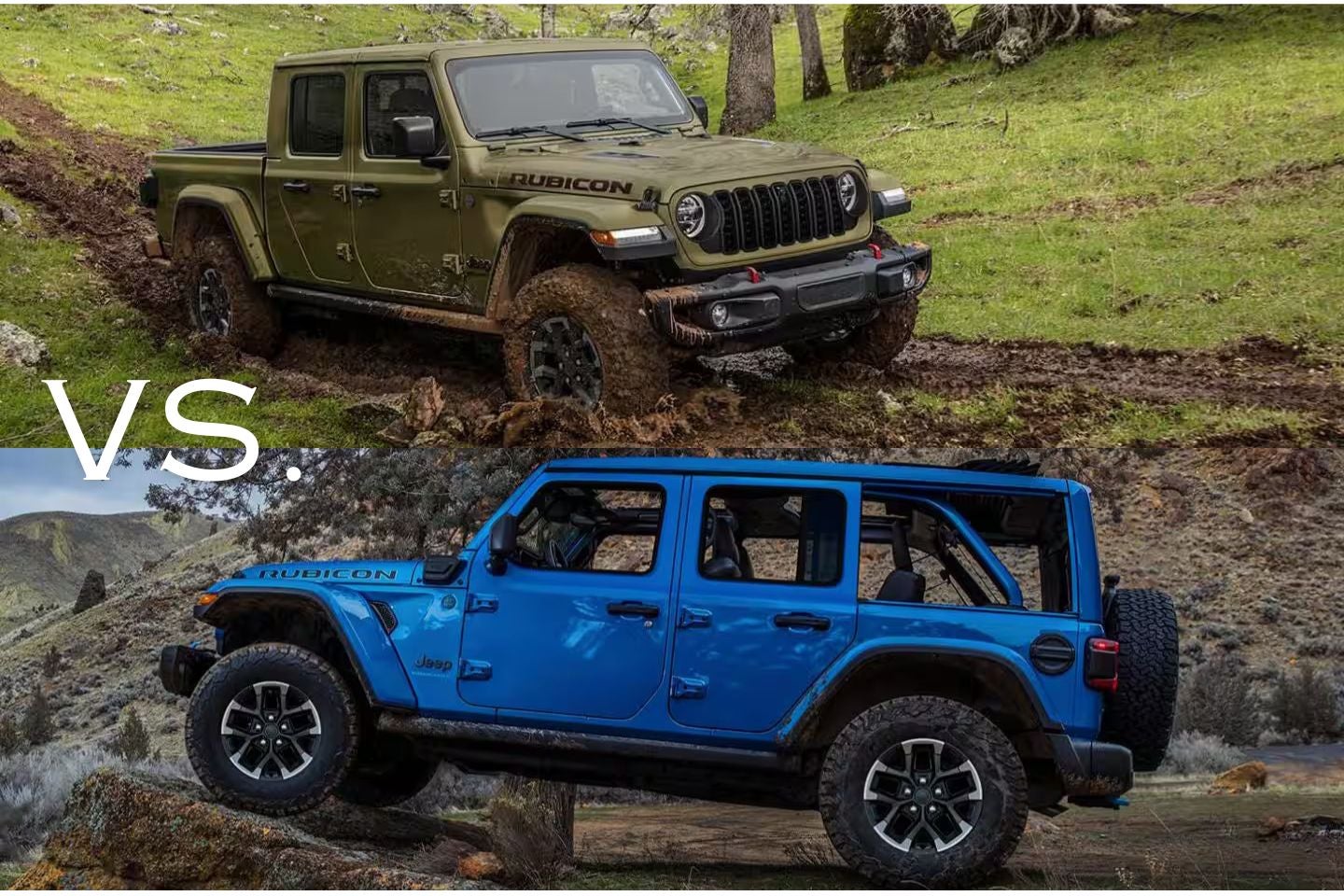
Jeep Wrangler vs. Jeep Gladiator: Which Should You Buy?
The Jeep Wrangler and Jeep Gladiator look like siblings, and they are. They share the same seven-slot grille, round headlights, removable doors and tops, solid axles and Trail Rated capability. But one is a legendary SUV and the other is a pickup truck, and that one difference changes almost everything about how they fit into your life. If you're torn between the two, you're not alone. It's one of the most common questions we hear from Jeep shoppers in Lee's Summit. The short answer Choose the Jeep Wrangler if you want the more maneuverable, easier-to-park Jeep with more engine choices, including the 470-hp V8 Wrangler 392, and you mainly carry people and gear inside. Choose the Jeep Gladiator if you need a pickup bed and more towing and hauling: it's rated to tow up to 7,700 pounds and carry up to 1,720 pounds of payload when properly equipped, with a five-foot bed. Both deliver the same open-air, go-anywhere Jeep experience. In this guide, we'll compare the 2026 Wrangler and Gladiator on size, engines, towing, cargo, off-road capability, trims and everyday livability around the Kansas City area. By the end, you'll know which Jeep makes more sense for your commute, your weekend plans and your lifestyle, and what to ask when you come in for a test drive. Wrangler vs. Gladiator at a Glance Here's how the 2026 models compare, based on Jeep's published specifications and the 2026 Gladiator buyer's guide from MoparInsiders. 2026 Jeep Wrangler 2026 Jeep Gladiator Body style 2-door or 4-door SUV 4-door crew cab pickup Engines 2.0L turbo 4-cylinder (270 hp); 3.6L Pentastar V6 (285 hp); 6.4L HEMI V8 on Wrangler 392 models (470 hp) 3.6L Pentastar V6 (285 hp) Transmission 8-speed automatic; a manual has been offered with the V6 on recent models 8-speed automatic Max towing Up to 2,000 lb (2-door) and 3,500 lb (4-door) per Jeep's FAQ, when properly equipped Up to 7,700 lb when properly equipped Max payload Lower; varies by configuration Up to 1,720 lb (4x4) Cargo Enclosed cargo area behind the rear seat 60.3-inch bed (35.5 cu ft) Overall length Shorter, especially the 2-door About 218 inches Wheelbase Shorter 137.3 inches Removable top and doors Yes Yes A Little Jeep History The Wrangler has been Jeep's icon since it replaced the CJ in the late 1980s, carrying forward a lineage that goes all the way back to the military Jeeps of World War II. The Gladiator name has deep roots, too. Jeep used it on its full-size pickups in the 1960s, and it returned on today's Wrangler-based pickup for the 2020 model year. For many Jeep fans, the modern Gladiator answered a question they'd been asking for years: what if a Wrangler had a bed? Size and Maneuverability The biggest practical difference between these two Jeeps is size. The Gladiator is a full pickup, about 218 inches long with a 137.3-inch wheelbase, according to MoparInsiders' 2026 buyer's guide. That makes it roughly two and a half feet longer than a four-door Wrangler, and far longer than a two-door. What that means on the road Parking: The Wrangler fits into tight spots, garages and crowded lots much more easily. If you're parking downtown, at the Plaza or at a busy Lee's Summit shopping center, you'll notice the difference. Turning: The Wrangler's shorter wheelbase makes U-turns, cul-de-sacs and drive-thrus easier. Highway ride: The Gladiator's longer wheelbase gives it a calmer, more settled ride on I-70 and I-470, which many drivers appreciate on long trips. Garage fit: Measure your garage before you buy a Gladiator. Many fit, but not every garage does. What that means off-road On tight, twisty trails and steep obstacles, the Wrangler's shorter wheelbase is an advantage. It can climb over crests without scraping its belly and turn around in tighter spaces. The two-door Wrangler is especially nimble. The Gladiator's long wheelbase can make tight switchbacks and sharp crests trickier, though it's very stable on long climbs, open desert-style terrain and high-speed dirt roads. That's one reason the Gladiator Mojave is Desert Rated. Engines and Performance Wrangler: More choices, including a V8 The 2026 Wrangler offers three engines: 2.0L turbo four-cylinder: 270 horsepower and 295 lb-ft of torque, with strong low-end pull. 3.6L Pentastar V6: 285 horsepower and 260 lb-ft of torque, the long-running Wrangler workhorse. 6.4L HEMI V8: 470 horsepower and 470 lb-ft of torque in the limited-edition Wrangler Moab 392 and Willys 392. Note that the Wrangler 4xe plug-in hybrid is not part of the 2026 lineup. Stellantis discontinued its U.S. plug-in hybrids for the 2026 model year. Want to know more about the V8? Read our guide, What Is the Jeep Wrangler 392? Gladiator: Proven V6 power Every 2026 Gladiator uses the 3.6L Pentastar V6, rated at 285 horsepower and 260 lb-ft of torque, paired with an eight-speed automatic transmission. It's a proven, simple setup that's well matched to the Gladiator's work-and-play mission. The verdict on power If you want engine choices, or if you're dreaming of V8 power, the Wrangler wins. If you're happy with a proven V6 and care more about towing and hauling, the Gladiator's single-engine lineup keeps things simple. Towing and Hauling This is where the Gladiator pulls ahead, literally. Gladiator Towing: up to 7,700 pounds when properly equipped with the available tow package. Payload: up to 1,720 pounds in 4x4 configuration. Bed: 60.3 inches long with the tailgate closed and 56.8 inches wide, with 35.5 cubic feet of volume. That's enough to tow many small campers, a pontoon boat, a pair of jet skis or a utility trailer, and the bed swallows muddy gear, mulch, coolers, dirt bikes and camping equipment you'd rather not put inside. Wrangler The Wrangler is built for capability and fun, not heavy towing. Jeep's 2026 Wrangler FAQ lists towing up to 2,000 pounds for two-door models and 3,500 pounds for four-door models when properly equipped. (Another part of the same FAQ mentions 5,000 pounds for the four-door, so confirm the exact rating for the specific Wrangler you're considering.) That's plenty for a small utility trailer, a couple of dirt bikes or a small teardrop camper, but the Gladiator is the clear choice for anything bigger. A Wrangler is also a popular vehicle to flat-tow behind a motorhome, which is a big draw for RV owners. Check your owner's manual for the correct procedure. If you need even more towing capacity, a Ram truck may be the right fit. Our guide to half-ton vs. three-quarter-ton vs. one-ton trucks explains the options. Cargo and Practicality Wrangler: Enclosed and secure The Wrangler's cargo area is inside the vehicle, behind the rear seat. That means your gear stays dry and secure when the top is on, and you can fold the rear seat for larger items. It's great for groceries, luggage, sports gear and a dog crate. The two-door Wrangler has much less cargo room than the four-door, so families usually choose the four-door Wrangler. Gladiator: Bed plus cabin The Gladiator gives you a full four-door cabin plus an open bed. You can carry dirty, wet or bulky items in the bed and keep passengers comfortable inside. Add a tonneau cover or bed cover to keep cargo dry and out of sight. For people who camp, fish, hunt, garden or work on home projects, the bed is a game changer. Passengers Both the four-door Wrangler and the Gladiator have four doors and a back seat, making them practical for families. The two-door Wrangler is best for one or two people, with a small back seat for occasional use. Off-Road Capability Both are Trail Rated, which means they've passed Jeep's testing for traction, ground clearance, maneuverability, articulation and water fording. Both use solid front and rear axles and are available with serious off-road hardware. 4x4 systems: Both offer Command-Trac and Rock-Trac systems, and Selec-Trac with a 4WD Auto mode is available on select models. Rubicon models add locking differentials and extra-low gearing. Gladiator capability: According to MoparInsiders' 2026 guide, the Gladiator offers up to a 77:1 crawl ratio, 11.6 inches of ground clearance and up to 31.5 inches of water fording. Sway bar disconnect: available on Rubicon models of both, for more wheel articulation off-road. Desert Rated Mojave: The Gladiator Mojave and Mojave X are built for high-speed off-roading with FOX suspension hardware. Wrangler 392: The V8 Wranglers bring 35-inch tires and 470 horsepower to the trail. For rock crawling and tight trails, many enthusiasts prefer the Wrangler's shorter wheelbase. For overlanding, camping trips and desert-style trails, the Gladiator's bed and stability make it a favorite. 2026 Gladiator Trims at a Glance According to MoparInsiders, the 2026 Gladiator lineup includes: Sport and Sport S: the essential Gladiators, with the Sport S adding more features and available aggressive all-terrain tires. Willys: off-road-ready style and equipment with heritage cues. Sahara: new for 2026, focused on comfort with features like heated front seats, a heated steering wheel and a 12.3-inch touchscreen. Willys '41: a special edition with heritage styling. Mojave and Mojave X: Desert Rated with FOX suspension hardware for high-speed off-roading. Rubicon and Rubicon X: the most rock-crawling-focused Gladiators, with the Rock-Trac transfer case and locking differentials. The Wrangler offers an even wider range of trims and special editions, from the Sport to the Rubicon and the V8-powered Moab 392 and Willys 392. Our sales team can walk you through the current lineup and what's in stock. Open-Air Fun: Doors and Tops This is where the Wrangler and Gladiator are nearly identical, and it's one of the biggest reasons people buy a Jeep. Both offer removable tops and removable doors. Jeep says the 2026 Wrangler's three-piece Freedom Top hardtop is removable and the doors come off using an easy-release hinge system, and MoparInsiders notes the 2026 Gladiator also has an updated hinge system that makes door removal quicker. Soft tops and other top options are available too. On a warm Missouri evening, there's nothing quite like dropping the top and cruising to dinner or a summer concert. Whichever you choose, you'll get that signature Jeep open-air experience. Everyday Living in the Kansas City Area Winter: Both are true 4x4s with excellent ground clearance, so they handle snowy side streets, unplowed rural roads and steep driveways around Lee's Summit with confidence. Check out our guide to 4WD vs. AWD in snow and ice and our guide to all-season vs. winter vs. all-terrain tires. Commuting: If you drive into Kansas City every day and park in tight garages, the Wrangler is easier to live with. If you have plenty of room to park, the Gladiator's longer wheelbase is comfortable on the highway. Weekends at the lake: If you tow a boat or jet skis to Lake of the Ozarks, Truman Lake or Smithville Lake, the Gladiator's 7,700-pound towing rating and bed make it the better choice. Home projects: Trips to the hardware store, mulch runs and hauling yard debris are much easier with a bed. Family: Both four-door models work well for families. The Wrangler's enclosed cargo area keeps groceries and sports gear secure, while the Gladiator's bed handles messy gear. Ownership Considerations Beyond the sticker, think about what it costs and takes to live with each Jeep: Fuel: Both use similar V6 engines in most configurations, but the Gladiator's extra size and weight generally mean slightly lower fuel economy than a comparable Wrangler. The Wrangler's turbo four-cylinder can be the most efficient choice. Check the window sticker for exact figures. Tires: Off-road trims with larger all-terrain or mud-terrain tires cost more to replace. Factor that in if you're choosing between trims. Insurance: Rates vary by model, trim and driver. Get quotes for both before you decide. Accessories: Many owners add bed covers, racks, lighting, recovery gear or a lift. Budget for the upgrades you know you'll want. Resale value: Wranglers have a long history of holding their value well, and Gladiators are popular on the used market, too. Maintenance: Both need the same routine care as any 4x4, including oil changes, tire rotations and periodic checks of the axles and transfer case, especially if you spend time off-road. Our guide to oil change intervals is a good place to start. Popular First Upgrades Wrangler owners often start with all-weather floor liners, a cargo organizer, auxiliary lighting, a sun bonnet or bikini top for summer and recovery gear for the trail. Gladiator owners often start with a tonneau or bed cover, a bed liner, a bed rack for rooftop tents and bikes, tie-down systems and a trailer hitch setup that matches what they tow. Genuine Mopar and Jeep Performance Parts accessories are designed to fit your Jeep, and our parts team can help you plan your build. Which Jeep Should You Buy? Choose the Jeep Wrangler if you: Want the easiest Jeep to park and maneuver Want a choice of engines, including turbo-four, V6 or V8 power Love tight trails and rock crawling Mostly carry passengers and gear inside the vehicle Want a two-door option Plan to flat-tow your Jeep behind an RV Choose the Jeep Gladiator if you: Need to tow more, with up to 7,700 pounds of towing capacity Want a pickup bed for camping gear, dirt bikes, coolers and home projects Prefer a calmer highway ride from a longer wheelbase Love overlanding, camping and desert-style off-roading Want one vehicle that combines Jeep fun with truck utility Both are excellent choices, and both hold a special place in the Jeep family. The best way to decide is to drive them back to back, ideally on the same day. Buying, Leasing and Trading In Wranglers and Gladiators are popular with drivers who modify their vehicles with lift kits, bigger tires, bumpers and lighting. If you plan to customize, buying is usually the simpler path. Our guide to leasing vs. buying a Jeep or Ram explains the pros and cons. And if you're trading in your current vehicle, we'll appraise it so you know exactly where you stand. Frequently Asked Questions Is the Jeep Gladiator just a Wrangler with a bed? Not exactly. The Gladiator shares the Wrangler's design, removable doors and top, and Trail Rated capability, but it has a longer frame and wheelbase, a five-foot bed and much higher towing and payload ratings. Which is better off-road, the Wrangler or the Gladiator? Both are Trail Rated. The Wrangler's shorter wheelbase is an advantage on tight trails and steep crests, while the Gladiator is very stable on long climbs and high-speed dirt roads, especially in Desert Rated Mojave form. How much can the 2026 Jeep Gladiator tow? Up to 7,700 pounds when properly equipped with the available tow package, according to Jeep. Its maximum payload is 1,720 pounds in 4x4 configuration. How much can the 2026 Jeep Wrangler tow? Jeep's 2026 Wrangler FAQ lists up to 2,000 pounds for two-door models and 3,500 pounds for four-door models when properly equipped. Confirm the rating for the exact Wrangler you're considering. Does the Gladiator come with a V8? No. Every 2026 Gladiator uses the 3.6L Pentastar V6 with 285 horsepower. The V8 is available only in the Wrangler Moab 392 and Willys 392. Is there still a Wrangler 4xe for 2026? No. Stellantis discontinued its U.S. plug-in hybrids, including the Wrangler 4xe, for the 2026 model year. Certified pre-owned 4xe models may still be available. Which is better as a daily driver? For most commuters, the four-door Wrangler is easier to park and maneuver in town, while the Gladiator's longer wheelbase gives a smoother highway ride. If you have room to park it and want a bed for weekend projects, the Gladiator makes a great daily driver too. Can you take the doors off a Gladiator? Yes. Like the Wrangler, the Gladiator has removable doors and a removable top, and the 2026 model has an updated hinge system that makes door removal quicker. Test Drive Both at McCarthy CDJR in Lee's Summit The best way to choose between a Wrangler and a Gladiator is to drive them both. At McCarthy Jeep Ram Chrysler Dodge, we'll set up back-to-back test drives, walk you through trims and options, and help you find the right Jeep for your commute, your weekends and your budget. Ask about trade-in appraisals and financing while you're here. We're located at 1051 SE Oldham Parkway in Lee's Summit, just off US-50, serving Jeep fans from Blue Springs, Raymore, Independence, Belton, Grain Valley, Greenwood, Overland Park and across the Kansas City metro. Browse our Jeep Wrangler and Gladiator inventory or call us at (816) 441-5389 to schedule a test drive. Shop Wrangler and Gladiator