



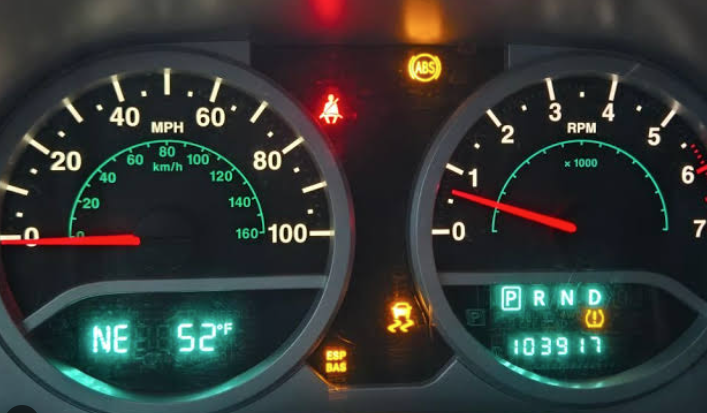
You're cruising down I-470 when a little symbol you've never noticed before lights up on the dash. Is it serious? Can you keep driving? Do you need to pull over right now, or can it wait until the weekend? Every Jeep owner has had that moment, and the answer isn't always obvious when you're looking at a tiny orange icon at 65 mph.
The short answer
Start with the color. Red means stop safely and check the problem now. Yellow or amber means something needs attention soon, but you can usually keep driving carefully. Green, white and blue lights simply tell you a system is on. A flashing light is almost always more urgent than the same light glowing steadily.
In this guide, we'll walk through the warning lights and indicators you're most likely to see on a Jeep Wrangler, Gladiator, Grand Cherokee, Compass, Cherokee or Wagoneer, what each one means and exactly what to do next. We've based it on the official Jeep and Stellantis owner's manuals, plus what our service team in Lee's Summit sees in the shop every week. Keep it bookmarked, or better yet, use it alongside the owner's manual in your glove box, since every model and trim has a few symbols of its own.
Start With the Color: What Each Light Color Means
Jeep groups its dashboard symbols by color, and the color is the fastest way to judge how urgent a light is. Jeep's owner's manuals sort them into red warning lights, yellow warning lights and indicator lights in yellow, green, white and blue.
| Color | What it means | What to do |
|---|---|---|
| Red | A safety issue or a problem that can damage the vehicle | Pull over when it's safe and check it now. Some red lights mean you shouldn't keep driving. |
| Yellow or amber | A system needs attention or has a fault | Keep driving carefully and schedule service soon. |
| Green | A system is on and working | Nothing. It's information only. |
| White | A system is ready or available | Nothing. It's information only. |
| Blue | High beams are on | Dim them for oncoming traffic. |
One important exception: on Jeep 4x4 models, some yellow lights are simply indicators. The 4WD, 4WD Low and sway bar disconnect lights on a Wrangler, for example, are yellow because they're reminding you that an off-road system is engaged, not because something is wrong. We'll cover those below.
Why every light comes on when you start your Jeep
When you turn the ignition on, many warning lights light up for a few seconds and then go out. That's a self-check, and it's normal. It's actually a problem if a light like the check engine, airbag or ABS light does not come on during startup, because that can mean the warning system itself isn't working. Jeep's manuals recommend having it inspected if that happens.
Red Warning Lights: Stop Safely and Check Now
Red lights are the ones you shouldn't ignore. Some, like the seat belt or door open light, are easy to fix on the spot. Others mean continuing to drive could damage the engine or transmission or affect your safety.
Oil pressure warning light
Looks like: an old-fashioned oil can with a drip.
This light means the engine's oil pressure is low. It's one of the most serious lights on the dash. Jeep's manuals say to pull over and shut off the engine as soon as it's safe, and not to drive the vehicle until the problem is fixed. The light doesn't tell you how much oil is in the engine, so check the level with the dipstick or the vehicle information display once the engine is off. Even if the oil level looks fine, have the vehicle towed or inspected before driving it again. Low oil pressure can destroy an engine in a very short time.
Don't confuse this light with the "Oil Change Required" message, which is just a maintenance reminder. Our guide on how long you can drive with an overdue oil change explains the difference.
Engine coolant temperature warning light
Looks like: a thermometer sitting in wavy lines of liquid.
Your engine is overheating. You'll usually hear a chime, too. According to Jeep's manuals, pull over safely, turn off the air conditioning, shift into Neutral and let the engine idle so the temperature can come down. If it doesn't return to normal, shut the engine off and call for service. Never open the radiator or coolant reservoir cap on a hot engine; the coolant is under pressure and can cause serious burns.
Overheating is most common in summer stop-and-go traffic, when towing or after a coolant leak. If you also see a yellow low coolant level light, the cause may be as simple as low coolant, but it still needs to be checked for a leak.
Oil temperature warning light
Looks like: an oil can with a thermometer.
The engine oil is running hotter than it should. This is more likely when you're towing, crawling slowly off-road on a hot day or climbing long grades. Pull over safely, turn off the engine and let the oil cool before continuing. If it happens repeatedly, have the cooling and lubrication systems checked.
Transmission temperature warning light
Looks like: a gear with a thermometer in the middle.
The transmission fluid is too hot, which often happens with heavy towing or long, slow off-road climbs. Jeep's manuals say to pull over, put the vehicle in Park or Neutral and let the engine idle until the light goes out, then you can continue. Don't keep driving with this light on: overheated fluid can boil over onto hot engine or exhaust parts and create a fire risk, and it will eventually cause serious transmission damage.
Battery charge warning light
Looks like: a car battery with plus and minus signs.
The battery isn't being charged properly. That usually points to a problem with the alternator, a belt or the charging system's wiring. When this light is on, your Jeep is running on battery power alone, and it may stall once the battery runs down. Turn off nonessential electrical items like heated seats and the radio, and head straight to a service department. Don't plan on making a long trip first.
Brake warning light
Looks like: an exclamation point inside a circle with brackets on each side, sometimes with the word "BRAKE."
This light has a few possible meanings:
- The parking brake is set. Release it and the light should go out.
- The brake fluid is low, which usually means there's a leak in the brake system.
- There's a hydraulic or brake booster fault. You may feel the pedal pulse or hear the ABS pump run.
- If the brake light and the ABS light come on together, the system that balances braking front to rear may have failed.
If the light stays on after you release the parking brake, Jeep's manuals are blunt: driving with the red brake light on is dangerous, and stopping distances can be longer. Have the vehicle checked right away, and tow it if the brake pedal feels soft or low.
Air bag warning light
Looks like: a seated person with a large circle in front of them.
The air bag system has a fault, which means an air bag may not deploy correctly in a crash. The light normally comes on for a few seconds at startup as a self-check. If it stays on, comes on while driving or doesn't light up at all during startup, have the system inspected as soon as possible.
Electronic Throttle Control (ETC) warning light
Looks like: a lightning bolt between two brackets.
This one is especially common on Jeep, Ram, Dodge and Chrysler vehicles. It means the electronic throttle system, which controls how the engine responds to the gas pedal, has detected a problem.
- Steady: the vehicle is usually still drivable. Stop safely, put the vehicle in Park and turn the ignition off and back on. If the light goes out, you're fine. If it stays on, schedule service soon.
- Flashing: a more serious problem. You may notice reduced power, a rough or high idle or stalling. Get service immediately; the vehicle may need to be towed.
The light can also come on briefly if you press the gas and brake pedals at the same time.
Power steering warning light
Looks like: a steering wheel with an exclamation point.
There's a problem with the power steering system. Steering may take noticeably more effort, especially at low speeds and in parking lots. Drive carefully to a service department and avoid tight maneuvering until it's fixed.
Other red lights
- Seat belt reminder: the driver or a front passenger isn't buckled. Buckle up.
- Door, hood or swing gate open: something isn't fully latched. Stop and close it before driving further, especially the hood.
- Vehicle security: on equipped models, this flashes when the security system is armed, which is normal. If it stays on while driving, the security system may have a fault.
Yellow Warning Lights: Get It Checked Soon
Yellow warning lights don't usually mean you need to pull over immediately, but they do mean something isn't working the way it should. Ignoring them can turn a small repair into a bigger one.
Check engine light
Looks like: the outline of an engine.
Officially called the Malfunction Indicator Light, this is part of your Jeep's onboard diagnostic system, which monitors the engine and emissions controls. The way it lights up tells you a lot:
- Steady: a problem has been detected. Sometimes it's minor, like a loose gas cap or poor-quality fuel. Your Jeep will usually drive normally, but if the light stays on after several drives, schedule service. Driving for a long time with the light on can affect fuel economy and other systems.
- Flashing: a serious problem, often an engine misfire, that can cause sudden power loss or severe catalytic converter damage. Reduce speed and get service as soon as possible. Jeep's manuals also warn not to park over dry grass, leaves or other flammable material, because an overheated catalytic converter can start a fire.
Some Jeeps also have a separate loose fuel filler cap light. If you see it, tighten the gas cap until it's secure. If the light doesn't go off after that, have it checked.
Tire pressure warning light (TPMS)
Looks like: a horseshoe-shaped tire cross-section with an exclamation point inside.
- Steady: one or more tires are below the recommended pressure. Check all four tires and fill them to the pressure listed on the label inside the driver's door, not the maximum number printed on the tire.
- Flashing for about a minute, then steady: the tire pressure monitoring system itself has a fault, so it may not warn you if a tire gets low. Have it checked.
This is the light Kansas City drivers see most often on the first cold morning of fall. As a rule of thumb, tire pressure drops about 1 to 2 PSI for every 10-degree drop in air temperature, so a tire that was fine on a 70-degree afternoon can trigger the light at 30 degrees the next morning. Check pressures when the tires are cold, before you've driven far. And never keep driving on a flat or badly underinflated tire, since handling can be affected.
ABS warning light
Looks like: the letters "ABS" inside a circle.
The anti-lock brake system has a fault. Your regular brakes should still work as long as the red brake warning light is off, but the anti-lock function won't, which matters most on wet or icy roads. Schedule service as soon as possible and leave extra stopping distance until then.
Electronic Stability Control (ESC) lights
ESC active, which looks like a vehicle with two wavy lines behind it: when this comes on while you're driving, the stability system is working to keep you from skidding. You may hear clicking or buzzing, which is normal. Ease off the gas and drive for the conditions. If the light stays on all the time, the system may have a fault and should be checked.
ESC off, which is the same symbol with the word "OFF": stability control has been partially or fully turned off. Some off-road situations call for that, such as rocking out of deep snow or mud, but turn it back on when you're back on pavement.
Service 4WD light
The four-wheel-drive system has detected a problem and isn't working correctly. Avoid off-road driving and get it inspected promptly. On Wrangler and Gladiator models, make sure you've completed any shift between 2H, 4H and 4L fully. Follow the shifting steps in your owner's manual, since an incomplete shift can also trigger a message.
Low coolant level light
The coolant is below the proper level. Once the engine is completely cool, check the coolant reservoir and top it off with the coolant type listed in your owner's manual. Coolant doesn't usually disappear on its own, so have the system checked for leaks, especially before towing or a long trip.
Other yellow warning lights
- Low fuel: time to fill up.
- Low washer fluid: refill the windshield washer reservoir. In winter, use a fluid rated for freezing temperatures.
- Service Forward Collision Warning: the forward collision system has a fault. A dirty windshield, snow or mud over the front sensor can sometimes cause it. Clean the area, and if the light stays on, have it checked.
- Service Stop/Start: the automatic engine stop/start system needs attention. The engine will still run normally.
- Sway bar fault (Rubicon models): the electronic sway bar disconnect isn't working correctly. Have it inspected before your next trail day.
- Air suspension fault (Grand Cherokee and Wagoneer with Quadra-Lift): the air suspension has detected a problem. Avoid changing ride height and have it checked.
- Cruise control or adaptive cruise control fault: cruise control won't work until the problem is fixed.
Indicator Lights: Systems Doing Their Job
These lights don't mean anything is wrong. They're telling you a feature is on, ready or engaged.
Four-wheel-drive and off-road indicators
- 4WD, 4WD Part Time and 4WD Low (yellow on Wrangler and Gladiator): show which transfer case mode you're in. They're yellow as a reminder, since part-time 4WD isn't meant for dry pavement.
- 4WD Auto (green): the full-time four-wheel-drive mode is engaged.
- Sway bar (yellow, Rubicon): the front sway bar is disconnected for more wheel travel off-road. Reconnect it before driving at higher speeds on pavement.
- Axle lock (yellow): the rear or front and rear lockers are engaged. Unlock them for normal driving and turning on pavement.
- Hill Descent Control and Selec-Speed Control (white): the low-speed descent or crawl control is ready or working.
Everyday indicators
- Stop/Start active (green): the engine has shut off at a stop to save fuel and will restart when you lift off the brake.
- Cruise control (white when ready, green when set): shows cruise control status.
- Forward Collision Warning off (yellow): the system has been turned off. You can turn it back on in the Uconnect settings.
- Headlights, fog lights and turn signals (green): these lights are on.
- High beams (blue): your high beams are on.
Messages That Aren't Warning Lights
Newer Jeeps also show text messages in the instrument cluster display. A few common ones:
- "Oil Change Required": the oil life monitor has reached 0%. It's a maintenance reminder, not an emergency. Schedule an oil change soon, and remember the monitor needs to be reset afterward. We have a guide for resetting the oil change light on a 2026 Jeep Compass.
- Tire pressure readings: many models show each tire's pressure, which makes it easy to see which one is low.
Driving a Wrangler? Our Jeep Wrangler dashboard warning lights guide covers Wrangler-specific details.
What to Do When a Warning Light Comes On
- Check the color and whether it's flashing. Red or flashing means act now; yellow and steady means schedule service soon.
- Notice how the Jeep feels. Unusual noises, smells, smoke, a soft brake pedal, overheating or a loss of power all raise the urgency.
- Pull over safely if it's red. Get completely off the road before checking anything under the hood.
- Read the message in the cluster. Many lights come with a text message that explains the issue more clearly.
- Look it up in your owner's manual. Every model has a few unique symbols, and the manual lists them all.
- Call your service department. If you're unsure whether it's safe to drive, ask. It's better to tow a vehicle a few miles than to replace an engine.
Frequently Asked Questions
Can I drive my Jeep with the check engine light on?
If the light is steady and your Jeep drives normally, you can usually drive it for a short time, but schedule service soon. If the light is flashing, reduce speed and get service as soon as possible, because a severe misfire can damage the catalytic converter.
What does the lightning bolt light mean on a Jeep?
The lightning bolt between two brackets is the Electronic Throttle Control light. If it's steady, stop safely, put the vehicle in Park and restart it; if it stays on, schedule service. If it's flashing, the problem is more serious and you may need a tow.
Why is my Jeep's tire pressure light on when it's cold outside?
Tire pressure drops about 1 to 2 PSI for every 10-degree drop in temperature, so the first cold morning often triggers the light. Fill the tires to the pressure on the driver's door label while the tires are cold.
Why are some 4WD lights on my Wrangler yellow?
On Wrangler and Gladiator models, the 4WD, 4WD Low, sway bar and axle lock lights are yellow indicators. They remind you an off-road system is engaged, not that something is broken. The separate "Service 4WD" light is the one that means there's a problem.
Why do all the warning lights come on when I start my Jeep?
That's a normal self-check. The lights should go out within a few seconds after the engine starts. If one stays on, or if a light like the airbag or check engine light never comes on at all during startup, have the vehicle inspected.
Will a warning light reset itself?
Some lights go out on their own once the cause is fixed, like tightening a loose gas cap or inflating a low tire. Others stay on until a technician repairs the problem and clears the code.
Warning Light On? McCarthy CDJR Can Help
When a light comes on and you're not sure what it means, our Jeep-certified technicians in Lee's Summit can find out fast. We use factory diagnostic equipment to read your Jeep's codes, explain what's going on in plain language and fix it with genuine Mopar parts. We work on every Jeep model, from classic Wranglers to the latest Grand Cherokee and Wagoneer.
We're located at 1051 SE Oldham Parkway in Lee's Summit, just off US-50, and we serve Jeep owners from Blue Springs, Raymore, Independence, Belton and across the Kansas City metro. Schedule your service online or call us at (816) 441-5389. If a red light means your Jeep shouldn't be driven, call us first and we'll help you figure out the next step.