




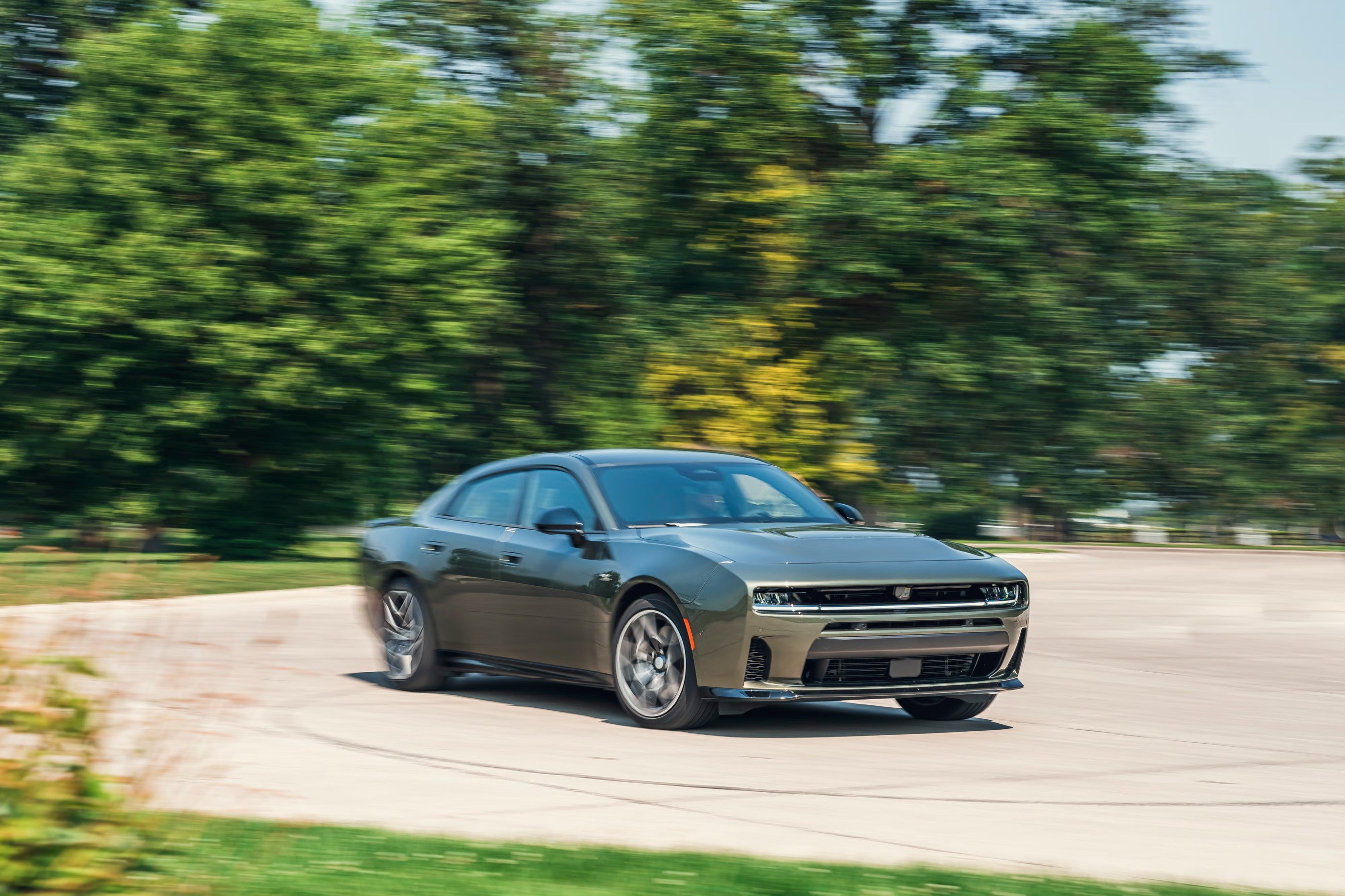
For more than half a century, Dodge and Ford have been fighting for the hearts of American performance fans. In 2026, that rivalry looks different than ever. The Dodge Charger has been completely reinvented with a twin-turbo inline-six, standard all-wheel drive and your choice of two or four doors. The Ford Mustang has stuck to its roots with a naturally aspirated V8, rear-wheel drive and an available manual transmission. Two very different answers to the same question: what should a modern muscle car be?
The short answer
The 2026 Dodge Charger is the more powerful, more spacious and more all-weather-capable choice, with up to 550 horsepower, standard AWD, a real back seat, a hatchback and a four-door option. The 2026 Ford Mustang is the lighter, more traditional sports car, with a V8 rumble, an available manual transmission and a convertible. If you want one car that can do everything, including Kansas City winters and family duty, the Charger has the edge. If you want a classic two-door V8 experience, the Mustang delivers.
In this guide, we'll compare the 2026 Charger and Mustang head to head on power, performance, drivetrain, space, technology and everyday livability, using the manufacturers' own published specs. We'll also explain which one makes more sense for drivers in Lee's Summit and the Kansas City area, where a muscle car has to handle a commute on I-470 and a snowy January morning, not just a sunny Saturday cruise.
The 2026 Charger and Mustang at a Glance
Here's how the two lineups compare, based on Dodge's and Ford's published 2026 specifications.
| 2026 Dodge Charger (gas) | 2026 Ford Mustang | |
|---|---|---|
| Engines | 3.0L twin-turbo Hurricane Sixpack inline-six | 2.3L turbo 4-cylinder; 5.0L V8 |
| Horsepower | 420 hp (R/T); 550 hp (Scat Pack) | 315 hp (EcoBoost); 480–486 hp (GT); 500 hp (Dark Horse) |
| Torque | 468 lb-ft (R/T); 531 lb-ft (Scat Pack) | 350 lb-ft (EcoBoost); 415–418 lb-ft (GT and Dark Horse) |
| Drivetrain | Standard AWD with selectable RWD mode | Rear-wheel drive |
| Transmission | 8-speed automatic | 6-speed manual or 10-speed automatic (V8); 10-speed automatic (EcoBoost) |
| Body styles | 2-door or 4-door | Fastback coupe or convertible |
| Cargo space | 22.8 cu ft; 37.4 cu ft with rear seats folded | 13.3 cu ft (fastback); 10.3 cu ft (convertible) |
| Seating | Full-size rear seat | 4, with a small rear seat |
Ford also offers the limited, supercharged Mustang Dark Horse SC and the track-focused Mustang GTD, and Dodge offers the all-electric Charger Daytona. This guide focuses on the mainstream gas-powered models most buyers are cross-shopping.
Power and Performance
Dodge Charger: Twin-turbo muscle
The biggest change for the Charger is under the hood. Instead of a HEMI V8, the gas-powered Charger uses Stellantis' 3.0-liter twin-turbo Hurricane inline-six, branded "Sixpack" in a nod to Dodge's classic six-barrel V8s. It comes in two strengths:
- Charger R/T (standard output): 420 horsepower and 468 lb-ft of torque. Dodge says it runs 0 to 60 mph in 4.6 seconds and the quarter mile in 12.9 seconds. That's 50 more horsepower and a half-second quicker to 60 than the HEMI V8 R/T it replaces.
- Charger Scat Pack (high output): 550 horsepower and 531 lb-ft of torque from twin Garrett turbos. Dodge's figures put it at 0 to 60 mph in 3.9 seconds and the quarter mile in 12.2 seconds.
Twin turbos give the Sixpack a huge, flat wave of torque that arrives early, so the Charger pulls hard from a stop and in passing situations without needing to wind out the engine. Combined with standard all-wheel drive, that power actually reaches the pavement. AWD lets the Charger launch hard without a cloud of tire smoke, which helps explain the quick 0 to 60 times.
Ford Mustang: The V8 tradition
The Mustang lineup starts with a 2.3-liter turbocharged four-cylinder EcoBoost making 315 horsepower and 350 lb-ft of torque. The heart of the lineup, though, is the 5.0-liter "Coyote" V8:
- Mustang GT: 480 horsepower and 415 lb-ft, or 486 horsepower and 418 lb-ft with the available active valve exhaust.
- Mustang Dark Horse: 500 horsepower and 418 lb-ft, with track-focused upgrades.
The naturally aspirated V8 is the Mustang's biggest emotional selling point. It loves to rev and delivers the classic American V8 sound that many enthusiasts crave.
The verdict on power
On paper, the Charger Scat Pack leads the mainstream Mustang lineup by 50 horsepower over the Dark Horse and by more than 100 lb-ft of torque. Even the Charger R/T makes more torque than any V8 Mustang below the Dark Horse SC. The Mustang counters with its V8 sound and lighter weight. If raw acceleration and torque are your priority, the Charger is hard to beat. If the sound and feel of a V8 matter most, the Mustang has the advantage.
Drivetrain: Standard AWD vs. Rear-Wheel Drive
This is one of the biggest differences between the two, and it matters a lot in the Kansas City area.
Every 2026 gas-powered Charger comes standard with all-wheel drive. According to Dodge, the system continuously varies torque between the front and rear axles, and a Wet/Snow mode splits power evenly for the best traction in bad weather. When you want old-school fun on dry pavement, you can switch the Sixpack Charger into a rear-wheel-drive mode that sends 100% of the torque to the rear wheels.
Every 2026 Mustang is rear-wheel drive. That's part of the Mustang's classic character, and on a dry, sunny day it's a blast. But rear-wheel-drive performance cars with wide summer tires can be a real challenge on snow and ice. Many Mustang owners in cold climates switch to winter tires or simply park the car for the season.
For Lee's Summit, Blue Springs, Raymore and Independence drivers who want a muscle car they can use all year, the Charger's AWD is a major advantage. You'll still want appropriate tires for winter conditions, but you won't have to choose between performance and getting to work after the first snow. For a deeper look, read our guide to 4WD vs. AWD in snow and ice.
Transmissions: Automatic vs. Manual
Every 2026 Charger uses an eight-speed automatic transmission with a pistol-grip shifter. It's quick, smooth and makes launch control easy.
The Mustang GT and Dark Horse offer something the Charger doesn't: a six-speed manual transmission, with a 10-speed automatic available. The EcoBoost comes only with the 10-speed automatic. If rowing your own gears is a must-have, the V8 Mustang is one of the few new performance cars that still lets you do it.
Size, Space and Practicality
Here the two cars are completely different animals.
Charger: A muscle car you can live with
The Charger is a large car with a real, adult-sized back seat and a clever hatchback design. Dodge says it offers 22.8 cubic feet of cargo space with the rear seats up and 37.4 cubic feet with them folded. It also comes as a two-door or a four-door, so families can have the four-door's easier rear access without giving up the Charger's performance.
That means a Charger can handle a Costco run, a weekend road trip to the Lake of the Ozarks, hockey bags, golf clubs or car seats in the back, and still be a 550-horsepower muscle car.
Mustang: A true sports car
The Mustang is smaller and lighter, and it feels like it. Ford lists seating for four, but the rear seat is tight and best for kids or extra storage. The fastback has 13.3 cubic feet of trunk space, and the convertible has 10.3 cubic feet. Ford is also the only one of the two that offers a convertible, which is a big draw for summer cruising.
The Mustang's smaller size and lighter weight make it feel nimble and easy to place on a twisty road. The tradeoff is less practicality for daily family use.
The verdict on practicality
If your performance car also needs to be your daily driver, family car or road-trip car, the Charger is the clear winner. If it's a weekend toy or a car for one or two people, the Mustang's size works just fine.
What They're Like to Drive
The Charger
The Charger feels like a big, confident grand touring car with a serious punch. Press the throttle and the twin-turbo six delivers a strong surge of torque, while the all-wheel-drive system puts it down cleanly, even on a cool or damp day. On the highway it's quiet and settled, and the long wheelbase makes it comfortable on long drives. Switch to rear-wheel-drive mode on a dry road or at a track day, and the Charger shows a more playful, old-school side. It's a car that's equally happy cruising to a dinner on the Plaza or blasting up an on-ramp.
The Mustang
The Mustang feels smaller, lighter and more eager to change direction. The V8 models reward you for revving the engine, and the manual transmission adds a level of involvement few modern cars offer. It's a more traditional sports-car experience: louder, more raw and more focused on the driver. The tradeoff is a firmer ride and a smaller cabin that can feel cramped on long trips with more than two people.
Technology and Interior
Both cars have modern, screen-heavy cabins.
- Charger: Uconnect 5 with a 12.3-inch center touchscreen, a 10.25-inch digital driver display with an available 16-inch display, an available head-up display and a pistol-grip shifter. Track tools like Line Lock and Launch Control are available.
- Mustang: A 12.4-inch digital instrument cluster and a 13.2-inch center touchscreen. Performance features like rev matching on manual models and track apps are available.
The biggest interior difference is space, not screens. The Charger's larger cabin and back seat make it more comfortable for passengers on long drives.
Fuel Economy
Dodge rates the 2026 Charger R/T at 23 mpg combined. That's impressive for a 420-horsepower, all-wheel-drive car, and it's one of the benefits of the twin-turbo six. The Mustang EcoBoost is the efficiency pick in Ford's lineup, while the V8 models trade some fuel economy for sound and character. Check the window sticker for each specific model, since fuel economy varies by engine, transmission and configuration.
2026 Charger Trims Explained
If you're leaning toward the Charger, here's a quick guide to the gas-powered lineup. Every trim is available as a two-door or a four-door.
- Charger R/T: the 420-horsepower standard-output Sixpack, standard AWD, a 12.3-inch touchscreen and a 10.25-inch digital cluster. The available Performance Handling Group adds Line Lock, Launch Control, a Custom drive mode, a shift indicator, Brembo six-piston front calipers and 20-inch wheels.
- Charger R/T Plus: adds more comfort and tech, including eight-way power seats, a head-up display and a 16-inch digital driver display.
- Charger Scat Pack: the 550-horsepower high-output Sixpack with twin Garrett turbos, an eight-speed automatic and AWD with selectable RWD mode. Dodge lists a top speed of 177 mph.
- Charger Scat Pack Plus: adds premium features, including the 16-inch driver display.
Two-door or four-door?
One of the new Charger's most unusual features is the choice of body style. The two-door has the classic coupe profile that recalls the original muscle-car era. The four-door makes it much easier to get people and car seats in and out of the back, which is a big deal for families. Both share the same engines, all-wheel drive and hatchback cargo area. If you regularly carry rear passengers, the four-door is worth a close look. If it's mostly you and one passenger, the two-door's style may win you over.
Ownership and Service
A performance car is a long-term relationship, so think about what ownership looks like after you drive off the lot. Turbocharged engines like the Sixpack rely on clean oil and regular maintenance, and all-wheel-drive systems benefit from periodic fluid checks and even tire wear. Performance tires and big brakes also wear faster than those on an everyday sedan. Having a local service department that knows your car makes a difference. Our certified technicians in Lee's Summit service Dodge performance vehicles, use genuine Mopar parts and can help you keep your Charger running the way it did on day one. Our guide to oil change intervals is a good place to start.
Which Should You Choose?
The Dodge Charger is right for you if:
- You want the most power and torque in the mainstream muscle-car segment
- You need to drive it year-round, including Kansas City winters
- You want a usable back seat, a big cargo area or a four-door option
- You want quick launches without fighting wheelspin
- Your performance car also needs to be your daily driver or family car
The Ford Mustang is right for you if:
- A naturally aspirated V8 sound is a must-have
- You want to drive a manual transmission
- You want a convertible for summer cruising
- You prefer a smaller, lighter two-door sports car
- It'll mostly be a weekend or fair-weather car
Both are great cars, and both carry on a proud American performance tradition. The best way to decide is to drive them back to back and see which one makes you grin wider.
Living With a Muscle Car in Kansas City
A performance car has to fit your real life, not just your weekend. A few things to think about around the metro:
- Winter: January in Kansas City averages lows around 24°F, with snow possible from November through April. AWD and the right tires make a performance car usable all year.
- Commuting: If your car will handle a daily drive on I-470, US-50 or I-435, comfort, fuel economy and visibility matter as much as horsepower.
- Road trips: Weekend drives to Lake of the Ozarks, Branson or Omaha are more comfortable with a roomy back seat and a big trunk.
- Insurance: High-horsepower cars can carry higher insurance costs. Get quotes on the specific models you're considering before you buy.
- Fuel: Check the recommended fuel for each engine. Many high-performance engines call for premium.
A Quick Look Back at the Rivalry
The Dodge vs. Ford muscle-car rivalry goes back to the 1960s, when the original Charger and Mustang helped define American performance. Over the decades, both nameplates have changed shape many times, from big-block V8 coupes to modern four-door sedans and high-tech performance machines. Today's Charger takes the rivalry in a bold new direction with turbocharged power and all-wheel drive, while the Mustang stays loyal to its V8 roots. Want more Mopar history? Read our look back at the Dodge Viper.
Frequently Asked Questions
Which is faster, the 2026 Dodge Charger or the Ford Mustang?
The 2026 Charger Scat Pack makes 550 horsepower, more than any mainstream Mustang, and Dodge rates it at 0 to 60 mph in 3.9 seconds. Its standard all-wheel drive helps it launch hard. Ford does offer the limited, supercharged Mustang Dark Horse SC, which makes more power.
Does the 2026 Dodge Charger have a V8?
No. The 2026 gas-powered Charger uses a 3.0-liter twin-turbo Hurricane Sixpack inline-six, making 420 horsepower in the R/T and 550 horsepower in the Scat Pack. Dodge also offers the all-electric Charger Daytona.
Is the Dodge Charger all-wheel drive?
Yes. According to Dodge, all-wheel drive is standard on every 2026 Charger. The gas-powered Sixpack models also have a selectable rear-wheel-drive mode.
Does the 2026 Mustang come with a manual transmission?
Yes. The Mustang GT and Dark Horse come with a six-speed manual, with a 10-speed automatic available. The EcoBoost is automatic only. The Charger is automatic only.
Is the Charger available as a four-door?
Yes. The 2026 Charger R/T and Scat Pack are available as a two-door or a four-door. The Mustang is available as a two-door fastback or a convertible.
Which has more room, the Charger or the Mustang?
The Charger, by a wide margin. It has a full-size rear seat and 22.8 cubic feet of cargo space, or 37.4 cubic feet with the rear seats folded. The Mustang fastback has 13.3 cubic feet of trunk space and a small rear seat.
What is the top speed of the 2026 Charger?
According to published specs, the 2026 Charger R/T has a top speed of 168 mph, and the Charger Scat Pack has a top speed of 177 mph.
Which is better for winter driving?
The Charger's standard all-wheel drive and Wet/Snow mode make it the better choice for driving in snow and slush. The rear-wheel-drive Mustang can be driven in winter with the right tires, but it takes more care.
Test Drive the 2026 Dodge Charger at McCarthy CDJR
The best way to understand the new Charger is to feel that twin-turbo torque and all-wheel-drive launch for yourself. Stop by McCarthy Jeep Ram Chrysler Dodge in Lee's Summit to test drive the Charger R/T or Scat Pack in two-door or four-door form. Our team will walk you through the trims and options, help you find the right configuration and appraise your current vehicle for trade-in.
We're located at 1051 SE Oldham Parkway in Lee's Summit, just off US-50, serving drivers from Blue Springs, Raymore, Independence, Belton, Grain Valley, Greenwood, Overland Park and across the Kansas City metro. Browse our Dodge Charger inventory or call us at (816) 441-5389 to schedule a test drive.