



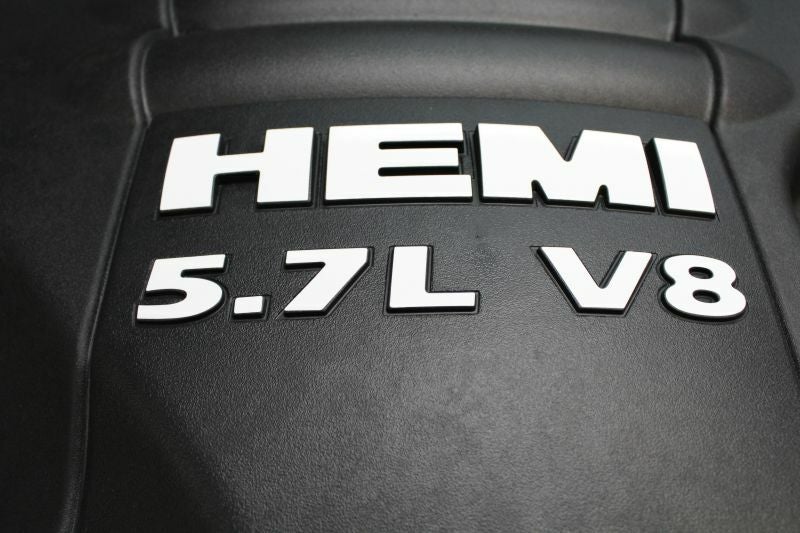
Few engine names carry as much weight as HEMI. Say it to a car or truck fan and you'll get a knowing grin. It means the thundering 426 that dominated NASCAR in the 1960s, the Hemi 'Cuda and Charger R/T that turned heads on Woodward Avenue, the Ram pickups that brought V8 power to job sites across America and the supercharged Hellcats that redefined what a muscle car could be. More than 70 years after Chrysler's first hemi-head V8, the name still sells trucks.
The short answer
HEMI is the name for Chrysler's V8 engines built around hemispherical, or dome-shaped, combustion chambers. The first, the 331-cubic-inch FirePower, debuted in 1951 with 180 horsepower. The legendary 426 HEMI swept the top three spots at the 1964 Daytona 500, and today's HEMI family powers the Ram 1500, Ram 2500/3500, Jeep Wrangler 392 and Dodge Durango. After a short break, Ram brought the 5.7-liter HEMI back to the Ram 1500 for 2026 because customers asked for it.
In this look back, we'll explain what makes a HEMI a HEMI, walk through each generation from the 1950s to today and cover the race wins, muscle cars and record-breaking horsepower that built the legend. We'll also show Lee's Summit and Kansas City drivers where they can still get HEMI power in a new Ram, Jeep or Dodge today.
What Makes a HEMI a HEMI?
The name comes from the shape of the combustion chamber, the space in the cylinder head where the air-fuel mixture burns. In a classic HEMI, that chamber is shaped like half of a sphere, or a hemisphere.
That dome shape has a few big advantages:
- Room for big valves: The curved chamber leaves space for large intake and exhaust valves set across from each other, so the engine can breathe in and push out more air.
- Efficient combustion: The chamber has a good surface-to-volume ratio, which helps the fuel burn efficiently and makes more power.
- A centrally placed spark plug: The flame spreads evenly across the chamber.
The tradeoffs were complexity and cost. Classic HEMIs had complicated valvetrains and were large, heavy and expensive to build, which is why early HEMIs were often reserved for premium cars and racing.
Modern HEMIs, starting with the 2003 5.7-liter, use a different chamber design that is no longer truly hemispherical. It's flatter and more efficient, and it uses two spark plugs per cylinder for cleaner, more complete combustion. The name stuck, though, along with the HEMI's reputation for big, reliable V8 power.
The HEMI Timeline at a Glance
| Year | Milestone |
|---|---|
| 1951 | Chrysler introduces the FirePower V8: 331 cubic inches and 180 horsepower |
| 1952–1953 | DeSoto FireDome and Dodge Red Ram HEMI V8s arrive |
| 1964 | The 426 race HEMI debuts; Plymouths finish 1-2-3 at the Daytona 500 |
| 1966 | The 426 Street HEMI arrives, rated at 425 horsepower |
| 1971 | The classic 426 Street HEMI era comes to an end |
| 2003 | The modern 5.7-liter HEMI debuts in the Dodge Ram with 345 horsepower |
| 2005 | The 6.1-liter HEMI powers SRT models with 425 horsepower |
| 2011 | The 6.4-liter "392" HEMI debuts with 470 horsepower |
| 2015 | The supercharged 6.2-liter Hellcat HEMI arrives with 707 horsepower |
| 2023 | The Challenger SRT Demon 170 makes up to 1,025 horsepower on E85 |
| 2026 | The 5.7-liter HEMI returns to the Ram 1500 |
The First Generation: FirePower, FireDome and Red Ram (1951–1950s)
Chrysler's first V8 for passenger cars arrived in 1951. It wasn't called HEMI yet. Chrysler branded it FirePower. It displaced 331 cubic inches (5.4 liters) and made 180 horsepower, which was a lot of power for a family car at the time.
Other Chrysler brands soon got their own versions. DeSoto introduced the FireDome V8 in 1952, and Dodge followed in 1953 with the Red Ram, a smaller V8 that gave Dodge buyers a taste of hemi-head performance. These engines quickly earned a reputation for strength and power, and racers and hot rodders took notice. The early hemi engines became favorites in drag racing, a reputation that still follows the HEMI name today.
The 426 HEMI: A Legend Is Born (1964–1971)
If one engine made the HEMI a legend, it was the 426.
Built to win at Daytona
Chrysler designed the 426 HEMI as a pure racing engine for NASCAR and drag racing. It made its debut at the 1964 Daytona 500, and the results were stunning. According to Stellantis, Richard Petty led 184 of the 200 laps in his HEMI-powered Plymouth and won at a record average speed of 154.334 mph. Plymouths with the 426 HEMI took the top three spots. Petty went on to win the 1964 NASCAR championship.
The HEMI was so dominant that NASCAR changed its rules, requiring engines to be available in production cars. Chrysler sat out much of the 1965 stock car season as a result, then came back with a street version.
The 426 Street HEMI
In 1966, Chrysler began offering a detuned version of the race engine to the public. The 426 Street HEMI was rated at 425 horsepower and 490 lb-ft of torque. It became the ultimate option in Dodge and Plymouth muscle cars, and today the cars that carried it are some of the most valuable American cars ever built, including:
- Dodge Charger and Charger R/T
- Dodge Coronet R/T and Super Bee
- Dodge Challenger R/T
- Plymouth Road Runner and GTX
- Plymouth 'Cuda
The 426 Street HEMI was expensive and built in small numbers, and changing emissions rules and insurance costs brought the classic muscle-car era to a close in the early 1970s. The last 426 Street HEMI cars were built for the 1971 model year. According to Stellantis, the 426's basic design still powers NHRA drag racers today.
Want to read more about this era? See our look back at Dodge's great muscle cars.
The Modern HEMI Returns (2003)
For three decades, the HEMI name was mostly a memory, and an aftermarket favorite for racers and restorers. Then, in 2003, Chrysler brought it back in a place many people didn't expect: the Dodge Ram pickup.
The new 5.7-liter HEMI made 345 horsepower and 375 lb-ft of torque. It was a modern engine, with two spark plugs per cylinder and a redesigned combustion chamber, built for durability, towing and everyday driving. It helped turn the Ram into a serious challenger in the full-size truck market and made "That thing got a HEMI?" one of the most famous lines in truck advertising.
The 5.7 soon spread across the lineup, into the Dodge Durango, Jeep Grand Cherokee, Chrysler 300C, Dodge Charger and Dodge Challenger. Later versions added the Multi-Displacement System, which shuts off four cylinders under light load to save fuel, and variable valve timing for more power and efficiency.
Bigger HEMIs for SRT: The 6.1 and the 392
Chrysler's Street and Racing Technology (SRT) group built higher-performance HEMIs for its most powerful models.
- 6.1-liter HEMI (2005): Built for SRT models like the Chrysler 300C SRT8, it made 425 horsepower and 420 lb-ft of torque, matching the horsepower rating of the original 426 Street HEMI.
- 6.4-liter "392" HEMI (2011): Named for its displacement in cubic inches, a nod to the 392 HEMI of the 1950s. It debuted in the Dodge Challenger SRT8 with 470 horsepower and 470 lb-ft of torque, and some later versions made 485 horsepower.
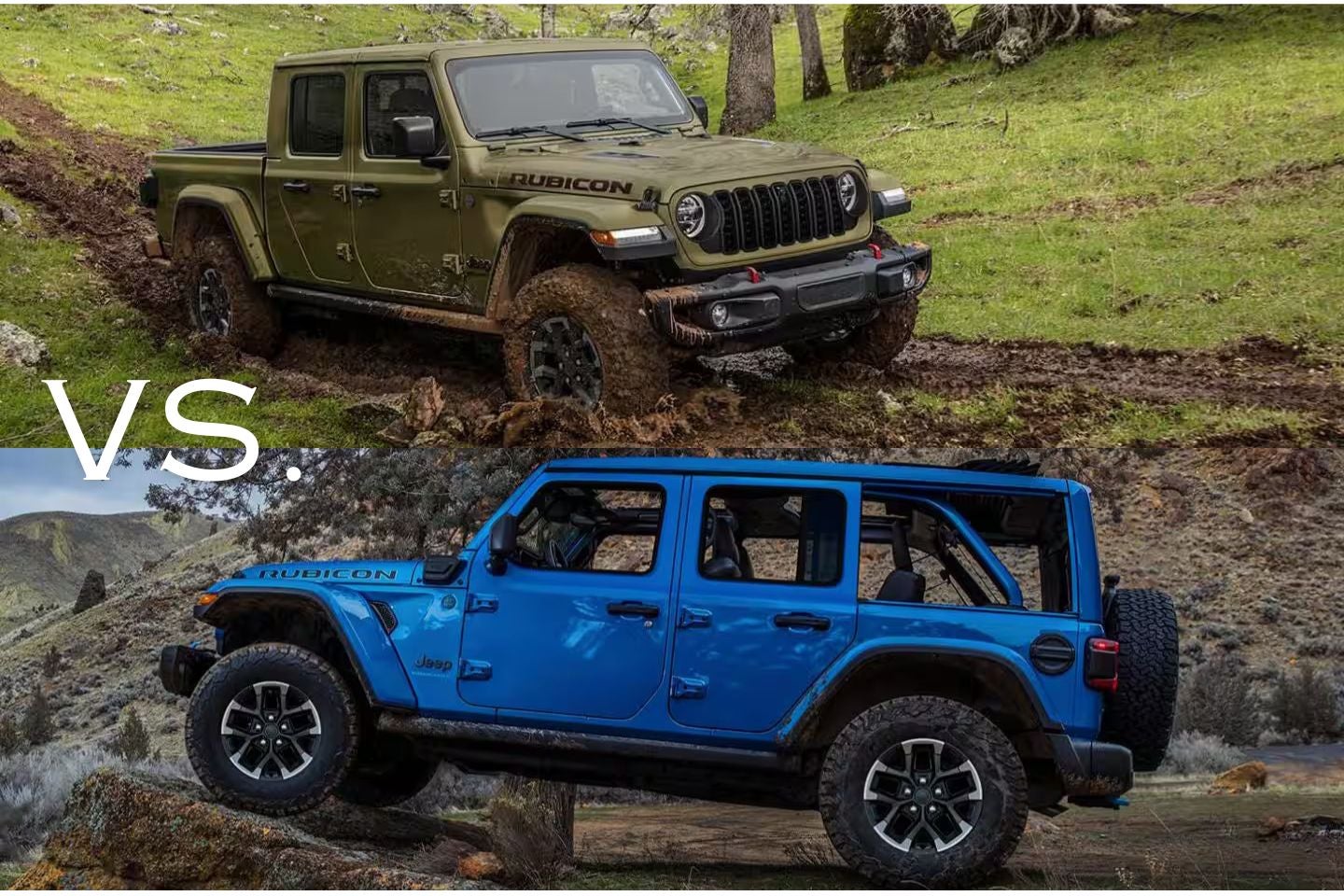
The 392 went on to power the Challenger and Charger Scat Pack, Jeep Grand Cherokee SRT, Dodge Durango SRT and, starting in 2021, the Jeep Wrangler Rubicon 392. A heavy-duty version of the 6.4-liter HEMI also powers Ram 2500 and 3500 trucks. Learn more in our guide, What Is the Jeep Wrangler 392?
The Supercharged Era: Hellcat, Demon and TRX
In 2015, Dodge stunned the automotive world with the supercharged 6.2-liter Hellcat HEMI. Rated at 707 horsepower and 650 lb-ft of torque, it made the Challenger and Charger SRT Hellcat some of the most powerful production cars on sale, at a fraction of the price of exotic supercars.
The Hellcat engine kicked off a horsepower war:
- Hellcrate: Mopar even sold the Hellcat engine as a crate engine, nicknamed the Hellcrate, for hot rodders and restorers.
- Challenger SRT Demon: rated at 808 horsepower on pump gas and 840 horsepower on 100-octane racing fuel.
- Challenger SRT Demon 170 (2023): up to 1,025 horsepower on E85 fuel. It was the final Challenger built at the Brampton, Ontario, plant in December 2023.
- Ram 1500 TRX: brought supercharged HEMI power to a high-performance off-road pickup from 2021 to 2024.
- Durango SRT Hellcat: put supercharged HEMI power in a three-row family SUV.
A Pause, Then a Comeback
As emissions and fuel economy rules tightened, Stellantis began replacing the HEMI with its new 3.0-liter twin-turbo Hurricane inline-six. The last HEMI-powered Challengers and Chargers were built in late 2023, and the Ram 1500 switched to Hurricane power for 2025.
Truck buyers made their feelings clear. In June 2025, Ram announced that the 5.7-liter HEMI would return to the Ram 1500 for 2026. Ram CEO Tim Kuniskis didn't sugarcoat it, admitting that Ram "screwed up when we dropped the HEMI" and saying the company had listened to its customers.
The supercharged HEMI is coming back, too. In January 2026, Ram revealed the 2027 Ram 1500 SRT TRX, powered by a supercharged 6.2-liter HEMI rated at 777 horsepower and 680 lb-ft of torque.
Where You Can Get a HEMI Today
The HEMI is very much alive in today's Ram, Jeep and Dodge lineup. Here's where you'll find it:
| Vehicle | HEMI engine | Output |
|---|---|---|
| 2026 Ram 1500 | 5.7L HEMI V8 with eTorque | 395 hp / 410 lb-ft |
| 2026 Ram 2500 and 3500 | 6.4L HEMI V8 | 405 hp / 429 lb-ft |
| 2026 Jeep Wrangler Moab 392 and Willys 392 | 6.4L HEMI V8 | 470 hp / 470 lb-ft |
| 2026 Dodge Durango SRT Hellcat Jailbreak | Supercharged 6.2L HEMI V8 | 710 hp |
The Dodge Durango GT HEMI also offers the 5.7-liter HEMI V8 with standard all-wheel drive, a great fit for families who want V8 power and three rows of seating.
The 2026 Ram 1500 HEMI
The returning 5.7-liter HEMI in the Ram 1500 makes 395 horsepower and 410 lb-ft of torque. It uses Ram's eTorque 48-volt mild-hybrid system, which replaces the traditional alternator with a belt-driven motor-generator. According to MoparInsiders, eTorque supports smooth stop/start operation, captures energy during braking and adds up to 130 lb-ft of extra torque when you first press the accelerator. The HEMI Ram 1500 is rated to tow up to 11,470 pounds and carry up to 1,750 pounds of payload when properly equipped.
According to MoparInsiders, the HEMI is available on Tradesman, Express, Warlock, Big Horn, Laramie, Rebel, Limited and Longhorn trims. It isn't offered on the Tungsten or RHO, which use the high-output Hurricane.
HEMI or Hurricane?
Ram 1500 shoppers now have a real choice. The twin-turbo Hurricane inline-six offers big torque, strong efficiency and, in high-output form, more horsepower. The HEMI offers the classic V8 sound, a proven design and a feel many truck owners love. The best way to decide is to drive both. Our guide to half-ton vs. three-quarter-ton vs. one-ton trucks can also help you choose the right Ram.
Caring for a HEMI
HEMI engines have a reputation for durability, and a little routine care helps keep it that way:
- Use the right oil. Stellantis owner's manuals call for SAE 0W-20 full synthetic in the 5.7-liter HEMI and SAE 0W-40 full synthetic in the 6.4-liter HEMI. Always confirm with your owner's manual or oil fill cap.
- Stay on schedule. Follow your oil change indicator and never exceed the maximum interval in your owner's manual. Our guide to oil change intervals by model explains more.
- Keep the oil level up. HEMIs with the Multi-Displacement System rely on steady oil pressure to switch cylinders on and off smoothly.
- Use the right fuel. Check your owner's manual. For example, Jeep recommends premium fuel rated 91 octane or higher for the 6.4-liter V8 in the Wrangler 392.
- Listen for changes. If you hear new ticking or tapping, have it checked early.
Our certified technicians in Lee's Summit work on HEMI engines every day, from classic 5.7 Rams to the latest Wrangler 392s.
Fun HEMI Facts
- It wasn't called HEMI at first. Chrysler's first hemi-head V8 in 1951 was marketed as the FirePower.
- Two spark plugs per cylinder. Modern HEMIs use 16 spark plugs in a V8 for cleaner, more complete combustion.
- A record-setting debut. Richard Petty's 1964 Daytona 500 win came at a record average speed of 154.334 mph.
- Rules were changed because of it. The 426 HEMI was so dominant that NASCAR rewrote its engine rules.
- You could buy one in a crate. Mopar sold the 707-horsepower Hellcat engine as the Hellcrate crate engine.
- The last Challenger was a HEMI. The final Challenger built at the Brampton, Ontario, plant in December 2023 was a 1,025-horsepower SRT Demon 170.
- The comeback was customer-driven. Ram brought the HEMI back to the Ram 1500 for 2026 after hearing from truck buyers who missed it.
Collecting Classic HEMI Cars
Original 426 Street HEMI cars from 1966 to 1971 are some of the most sought-after American collector cars, and later modern HEMI models are building their own following. If you're shopping for a classic or modern collectible HEMI car, a few tips:
- Verify the engine. Documentation, build sheets and matching numbers make a big difference in value for classic HEMI cars.
- Look for originality. Factory-correct parts and finishes matter to collectors.
- Check service records on modern HEMI performance cars, especially supercharged models that may have seen track or drag strip use.
- Get an inspection from a technician who knows Mopar performance engines before you buy.
- Store it properly, especially through Kansas City winters, with fresh fluids, a battery maintainer and a dry, secure space.
Why the HEMI Still Matters
The HEMI has outlasted trends, regulations and even its own retirement. Part of that is engineering: big, efficient combustion chambers and a strong, simple V8 design. But a bigger part is emotion. The HEMI connects today's drivers to Richard Petty's 1964 Daytona win, to the Hemi 'Cudas and Chargers that ruled the streets in the late 1960s and to the "That thing got a HEMI?" Rams that brought V8 pride to job sites and driveways.
Here in the Kansas City area, you'll still see that pride everywhere: HEMI Rams towing boats to the lake, Wrangler 392s heading out on weekend adventures and classic HEMI muscle cars at cruise nights and car shows across the metro. For many Mopar fans, a HEMI isn't just an engine. It's part of the family.
Frequently Asked Questions
What does HEMI stand for?
HEMI is short for hemispherical, which describes the dome-shaped combustion chambers of Chrysler's classic HEMI V8 engines. Modern HEMIs use a flatter, more efficient chamber design but keep the famous name.
When did the first HEMI engine come out?
Chrysler's first hemi-head V8 for passenger cars, the 331-cubic-inch FirePower, debuted in 1951 with 180 horsepower.
What was the 426 HEMI?
The 426 HEMI was Chrysler's legendary racing engine of the 1960s. Plymouths with the 426 finished 1-2-3 at the 1964 Daytona 500, and the 426 Street HEMI, rated at 425 horsepower, was offered in Dodge and Plymouth muscle cars from 1966 to 1971.
Is the HEMI coming back?
It's already back. Ram brought the 5.7-liter HEMI back to the Ram 1500 for 2026, rated at 395 horsepower and 410 lb-ft of torque. Ram also revealed the 2027 Ram 1500 SRT TRX with a 777-horsepower supercharged HEMI.
Which 2026 vehicles have a HEMI?
The 2026 Ram 1500 (5.7L), Ram 2500 and 3500 (6.4L), Jeep Wrangler Moab 392 and Willys 392 (6.4L) and Dodge Durango SRT Hellcat (supercharged 6.2L) all offer HEMI V8 power.
What is the most powerful HEMI ever?
The Dodge Challenger SRT Demon 170's supercharged HEMI made up to 1,025 horsepower on E85 fuel, making it the most powerful production HEMI.
Does the 2026 Dodge Charger have a HEMI?
No. The 2026 gas-powered Charger uses the twin-turbo Hurricane Sixpack inline-six. Read our Charger vs. Mustang comparison to learn more.
Get Your HEMI at McCarthy CDJR in Lee's Summit
Whether you want the classic rumble of a HEMI Ram 1500, the heavy-duty muscle of a 6.4-liter Ram 2500 or the trail-ready thrills of a Wrangler 392, the team at McCarthy Jeep Ram Chrysler Dodge can help you find your HEMI. We'll set up a test drive, explain the differences between HEMI and Hurricane power and help you choose the right configuration for the way you drive. Ask about trade-in appraisals while you're here.
We're located at 1051 SE Oldham Parkway in Lee's Summit, just off US-50, serving drivers from Blue Springs, Raymore, Independence, Belton, Grain Valley, Greenwood, Overland Park and across the Kansas City metro. Browse our HEMI-powered inventory or call us at (816) 441-5389 to schedule a test drive.