



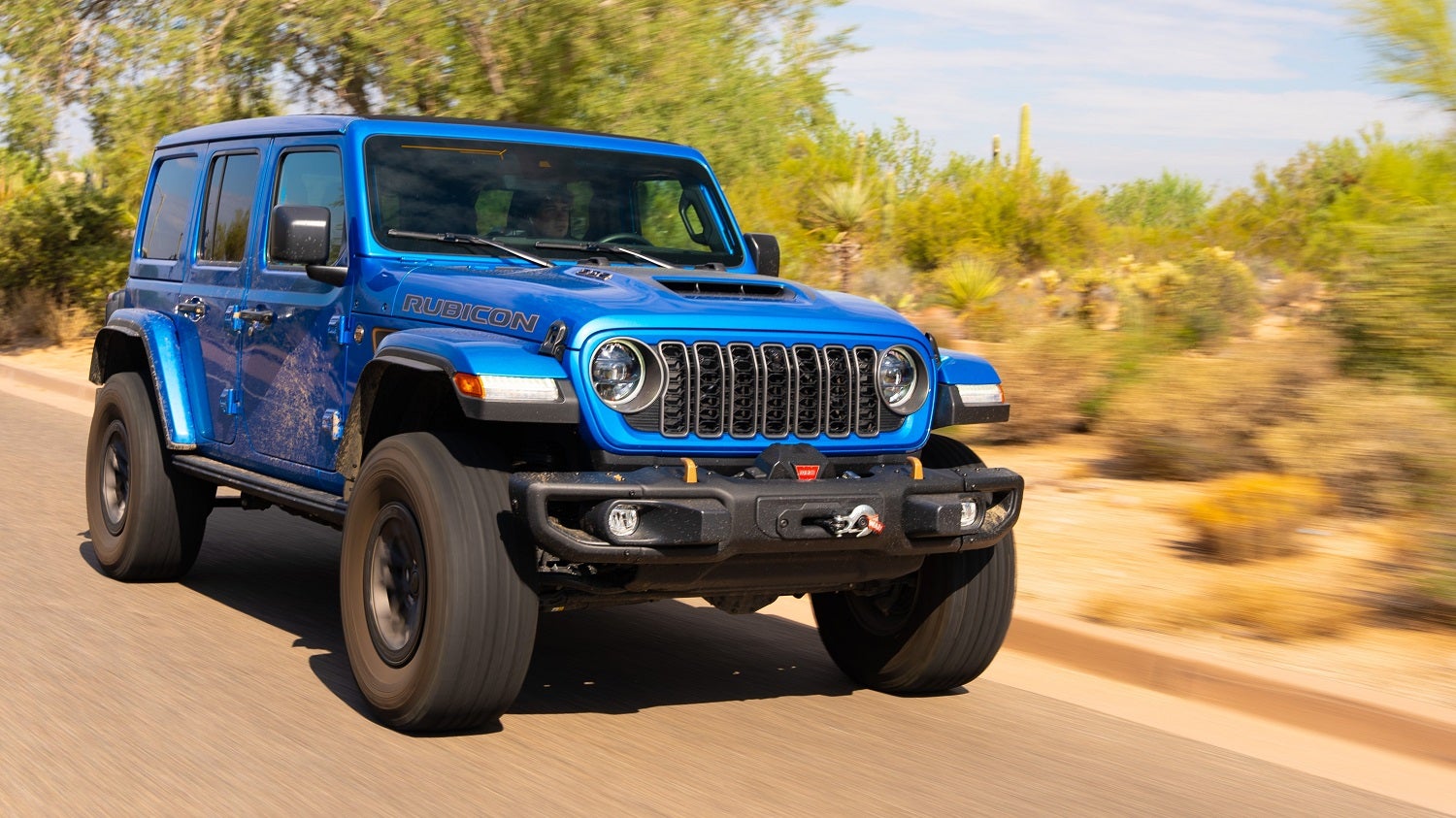
Most Jeep Wranglers are built to crawl. The Wrangler 392 is built to crawl and fly. Drop a 6.4-liter HEMI V8 into Jeep's most iconic off-roader and you get something that has no real rival: a trail-ready, removable-top 4x4 that can sprint from 0 to 60 faster than plenty of sports cars. It's no surprise "392 Jeep Wrangler" is one of the most searched Jeep terms out there. The short answer The Jeep Wrangler 392 is the V8-powered Wrangler. Its 6.4-liter (392-cubic-inch) HEMI V8 makes 470 horsepower and 470 lb-ft of torque, which Jeep calls the fastest and most powerful Wrangler yet. Jeep's launch figures put it at 0 to 60 mph in 4.5 seconds. After the Rubicon 392 and its Final Edition ended with the 2025 model year, the V8 returned for 2026 in two limited-edition models: the Wrangler Moab 392 and the Wrangler Willys 392. In this guide, we'll explain exactly what the 392 is, where the name comes from, how it performs on the road and on the trail, how the 2026 Moab 392 and Willys 392 differ, and how the V8 compares with the rest of the Wrangler lineup. If you're in Lee's Summit or anywhere in the Kansas City area and you've been wondering whether a V8 Wrangler belongs in your driveway, this is the place to start. What Does "392" Mean? The number is the engine's size in cubic inches. The 6.4-liter HEMI V8 displaces about 392 cubic inches, and Mopar fans have used "392" as its nickname for years. The engine has deep roots in Chrysler performance history, and it's the same family of HEMI V8 that has powered high-performance Dodge, Ram and Jeep models. Jeep's own spec sheets call it the 6.4L V8 SRT HEMI. In the Wrangler, the engine is tuned for 470 horsepower and 470 lb-ft of torque. That's a huge jump over the standard Wrangler engines, and it's the reason the 392 has become such a sought-after Jeep. The Fastest, Most Powerful Wrangler, by the Numbers Here's how the V8 stacks up against the other engines in the 2026 Wrangler lineup, using Jeep's published output figures. Engine Horsepower Torque Notes 6.4L HEMI V8 (392) 470 hp 470 lb-ft The only V8 in the class 2.0L turbo 4-cylinder plug-in hybrid (4xe) 375 hp 470 lb-ft Combined gas and electric output 3.6L Pentastar V6 285 hp 260 lb-ft The long-running Wrangler workhorse 2.0L turbo 4-cylinder 270 hp 295 lb-ft Strong low-end torque The 4xe matches the 392's torque, but the V8 delivers about 95 more horsepower and a sound no hybrid can match. When the Rubicon 392 launched, Jeep said it could run 0 to 60 mph in 4.5 seconds and cover the quarter mile in about 13 seconds. Those are remarkable numbers for a tall, boxy 4x4 on big off-road tires, and they're why the 392 has earned its "fastest Wrangler" reputation. Jeep's own press materials describe the 392 as the fastest and most powerful Wrangler yet. What it's like to drive Numbers only tell part of the story. The 392's character comes from how it delivers its power. There's no turbo lag, just instant response the moment you press the pedal, and a deep V8 rumble through a dual-mode exhaust that lets you choose a quieter or louder sound. Merging onto I-470 or US-50 feels effortless. Passing on two-lane Missouri highways on the way to the lake takes seconds, not planning. It's still a Wrangler, though. It rides on solid axles and big off-road tires, so it doesn't corner like a sports car, and its brakes and tires are tuned for the trail as much as the pavement. Think of it as an off-roader with a sense of humor, not a track car. A Short History of the V8 Wrangler The 392 has had a more dramatic history than most Jeeps, with a farewell, an encore and a comeback. 2021: The Rubicon 392 arrives. Jeep launched the first Wrangler with a factory V8, available as a four-door Rubicon only, with 470 hp, a 2-inch factory lift, Dana 44 axles front and rear with electronic lockers, Fox shocks and a functional hood scoop with Jeep's Hydro-Guide water-separating air intake. 2024: The Final Edition. In March 2024, Jeep announced the end of V8 Wrangler production and created the Rubicon 392 Final Edition as a send-off, with extra equipment and special interior details. 2025: An encore. In June 2024, Jeep announced the Final Edition would continue for the 2025 model year. After 2025, the Rubicon 392 name ended. 2026: The V8 comes back. Jeep brought the HEMI V8 back in two new limited-edition models as part of its "Twelve 4 Twelve" celebration of 85 years of Jeep. The Wrangler Moab 392 was revealed in November 2025 as the first model in the series, and the Wrangler Willys 392 followed in February 2026. Early reports from a dealer order guide suggest both V8 models will continue into the 2027 model year, but Jeep hasn't made an official announcement yet. If you've been waiting for your chance at a V8 Wrangler, the window is open now. What is "Twelve 4 Twelve"? Twelve 4 Twelve is Jeep's yearlong celebration of the brand's 85th anniversary. Jeep is revealing a new limited-edition Wrangler on the 12th of each month for 12 months. Each model has its own personality, and quantities of these special editions are limited, which is part of what makes the two 392 models so appealing to collectors and enthusiasts. Rubicon 392 vs. the 2026 V8 Models: What Changed? If you've followed the 392 since 2021, you might be wondering how the new models compare with the Rubicon 392 you remember. The heart of the vehicle is the same: the same 6.4L HEMI V8 rated at 470 horsepower and 470 lb-ft, the same eight-speed automatic and the same full-time Selec-Trac four-wheel drive. The biggest changes are in how the V8 is packaged and named: New names and personalities. Instead of one Rubicon 392, there are now two distinct models. The Moab 392 leans toward premium trail capability, and the Willys 392 leans toward heritage style and value. Simpler packaging. When Jeep introduced the Moab 392, it said it had reduced the number of mandatory options bundled into the vehicle, which made the V8 Wrangler easier to get into than the last Final Edition. Bigger tires and more clearance. Both 2026 models come standard with 35-inch tires and beadlock-capable wheels, and the Moab 392's 11.6 inches of ground clearance tops the original Rubicon 392's 10.3 inches. Limited-edition status. Both are part of Jeep's Twelve 4 Twelve anniversary series, with limited quantities. Wrangler Moab 392 vs. Willys 392: What's the Difference? Both 2026 models use the same 470-hp HEMI V8, eight-speed automatic transmission and full-time four-wheel drive. The differences come down to off-road hardware, styling and features. The Willys 392 is the lower-priced of the two and takes a classic, back-to-basics approach, while the Moab 392 adds more trail equipment and premium touches. Feature Moab 392 Willys 392 Engine 6.4L HEMI V8, 470 hp / 470 lb-ft 6.4L HEMI V8, 470 hp / 470 lb-ft Transmission 8-speed automatic 8-speed automatic 4x4 system Selec-Trac full-time 4WD Selec-Trac full-time 4WD Axles Dana 44 heavy-duty, 4.56 ratio Dana 44 heavy-duty, 4.56 ratio Rear locker Electronic Tru-Lok Electronic Tru-Lok Front locker Electronic Tru-Lok Conventional front differential Front sway bar Electronic disconnect Fixed Tires 35-inch BFGoodrich all-terrain 35-inch BFGoodrich KO2 Ground clearance 11.6 inches 11.1 inches Hardtop Body-color three-piece, standard Black three-piece, available Interior Nappa leather, Alpine audio, 12.3-inch Uconnect NAV Nappa leather, Alpine audio, 12.3-inch Uconnect NAV Choose the Moab 392 if: You plan to tackle serious rock crawling or technical trails, where front and rear lockers and a disconnecting sway bar make a real difference. You want the most premium V8 Wrangler, with a body-color hardtop and more available features. You want the extra ground clearance. Choose the Willys 392 if: You want V8 power and heritage styling, with Willys hood graphics, at a lower price. Your off-roading is mostly gravel roads, campgrounds, mud and moderate trails, where a rear locker and 35-inch tires are plenty. You'd rather put money toward accessories, lift kits or your own customizations. What Makes the 392 So Capable Off-Road A big engine would be wasted without the hardware to back it up. Here's what the V8 Wranglers bring to the trail: Selec-Trac full-time four-wheel drive with a 2.72:1 low range, so you can drive in 4WD on mixed surfaces and still crawl slowly over obstacles. Heavy-duty Dana 44 axles, including a full-float rear axle on the Willys 392, built to handle the V8's torque and 35-inch tires. Electronic locking differentials that force both wheels on an axle to turn together for maximum traction. 35-inch tires on beadlock-capable wheels, which allow serious off-roaders to run very low tire pressures. A functional cold-air intake hood with a water separator, which helps keep water out of the engine during water crossings. The original Rubicon 392 was rated for up to 32.5 inches of water fording, and the Moab 392 is reported at 34.5 inches. Rock rails and steel bumpers, including a winch-capable front bumper. The V8 advantage on the trail The 392's torque is useful off-road, not just on the highway. It can pull up steep climbs and through mud and sand with less throttle and less drama. Off-road drivers often say a big, smooth V8 makes it easier to control wheel speed on loose terrain. Combined with the low-range gearing, it gives the 392 both strength and finesse. Living With a V8 Wrangler Every Day The 392 is a blast, but it's also a real daily driver for plenty of owners. Here's what to know before you buy. Fuel Jeep recommends premium fuel, rated 91 octane or higher, for the 6.4L V8. Fuel economy is lower than the other Wrangler engines, which is the tradeoff for the power. If most of your driving is a daily commute around Lee's Summit or into Kansas City and fuel costs are a priority, the 2.0L turbo, the V6 or the 4xe may suit you better. Body style Every V8 Wrangler is a four-door Wrangler Unlimited, so there's room for passengers and gear. If you've been searching for the "biggest Jeep Wrangler," it's the four-door Unlimited, and the 392 models add a bit more height with their 35-inch tires and off-road suspension. Towing The Willys 392 includes Jeep's Trailer Tow Package, so it's ready for a small utility trailer, a pair of dirt bikes or a small boat. The Wrangler isn't built to be a heavy-duty tow vehicle, though. If towing a large camper or boat is a priority, take a look at the Jeep Gladiator or a Ram truck, or check our guide to half-ton vs. three-quarter-ton vs. one-ton trucks. Kansas City winters Full-time four-wheel drive and big all-terrain tires make the 392 confident in snow and slush. Keep in mind that powerful engines and big tires call for a gentle right foot on icy roads. Take it easy, and the Selec-Trac system will do the rest. Maintenance The V8 Wranglers need the same routine care as any Jeep: oil changes, tire rotations and regular checks of the 4WD system, axles and suspension, especially if you spend time off-road. Our service team in Lee's Summit is trained on HEMI engines and Jeep 4x4 systems. Our guide to oil change intervals is a good place to start. Making it your own Part of the fun of any Wrangler is personalizing it, and 392 owners are no exception. Popular first additions include all-weather floor liners for muddy boots and snowy Kansas City winters, auxiliary lighting wired to the factory auxiliary switches, recovery gear like traction boards and a recovery kit, and a winch for the winch-capable front bumper. Some owners add a cargo management system or a rooftop rack for camping trips. Genuine Mopar accessories are designed specifically for your Jeep, and our parts team can help you choose what fits your plans. Is a Wrangler 392 Right for You? The 392 isn't for everyone, and that's part of its appeal. Here's a quick way to decide. A 392 is a great fit if you: Want the ultimate Wrangler, with the most power Jeep has ever put in one Love the sound and feel of a V8 and know it may not be around forever Spend weekends on trails or at off-road parks and want serious hardware from the factory Want a limited-edition Jeep that stands out in any parking lot Consider another Wrangler if you: Want the best fuel economy and quiet electric driving, where the 4xe makes more sense Want a two-door Wrangler or a lower starting price Mostly drive on pavement and don't need 35-inch tires Still deciding? Our team can put you behind the wheel of different Wrangler models so you can feel the difference for yourself. If you're also cross-shopping a Gladiator, ask us about that, too. It's the same Jeep spirit with a pickup bed. Shopping for a Wrangler 392 Near Lee's Summit Because the Moab 392 and Willys 392 are limited editions, availability can change quickly. A few tips: Call ahead. Inventory moves fast on special editions. Check our current inventory online or call us to see what's on the lot or on the way. Ask about ordering. If we don't have the color or configuration you want, our team can tell you what's possible. Get your trade-in appraised. Knowing what your current vehicle is worth makes it easier to plan your purchase. Consider certified pre-owned. A pre-owned Rubicon 392 or Final Edition can be a great way to get V8 power. Ask about our certified pre-owned Jeep inventory. Plan your accessories. Many 392 owners add lighting, recovery gear or a winch. Our Mopar parts team can help. Buying a pre-owned Rubicon 392 or Final Edition A used Rubicon 392 can be a great way into a V8 Wrangler, but because many of these Jeeps are driven hard off-road, it pays to look closely. Before you buy, check: Service records, especially regular oil changes for the V8 and fluid changes for the axles and transfer case. Underbody condition, including skid plates, rock rails, control arms and the steering components, for signs of hard trail use. Tires and alignment, since uneven wear can point to suspension or steering issues. Aftermarket modifications, like lift kits, tuners or exhaust changes, which can affect reliability and warranty coverage. Open recalls, which you can look up by VIN on the NHTSA website. A certified pre-owned Jeep from a franchised dealer has gone through a detailed inspection, which can take a lot of the guesswork out of buying a used V8 Wrangler. Frequently Asked Questions What is a 392 Jeep Wrangler? It's the V8-powered Jeep Wrangler. The 392 refers to the 6.4-liter HEMI V8, which displaces about 392 cubic inches and makes 470 horsepower and 470 lb-ft of torque in the Wrangler. What is the fastest Jeep Wrangler? The V8-powered Wrangler 392 is the fastest. Jeep calls it the fastest and most powerful Wrangler yet, and its launch figures put it at 0 to 60 mph in 4.5 seconds. How much horsepower does the Jeep 392 have? The 6.4L HEMI V8 in the Wrangler 392 makes 470 horsepower and 470 lb-ft of torque. That's the most horsepower Jeep has offered in a Wrangler. Is the Jeep Wrangler 392 discontinued? The Rubicon 392 and its Final Edition ended after the 2025 model year, but the V8 returned for 2026 in two limited-edition models: the Wrangler Moab 392 and the Wrangler Willys 392. What's the difference between the Moab 392 and the Willys 392? Both have the same 470-hp V8 and full-time 4WD. The Moab 392 adds an electronic locking front differential, an electronic sway bar disconnect, more ground clearance and a standard body-color hardtop. The Willys 392 is the lower-priced, back-to-basics version with heritage styling. Does the Wrangler 392 need premium gas? Jeep recommends premium fuel rated 91 octane or higher for the 6.4L V8 in the Wrangler 392. What is the biggest Jeep Wrangler? The four-door Wrangler Unlimited is the largest Wrangler body style. All V8 Wrangler models are four-door Unlimited models, and their 35-inch tires and off-road suspension make them sit a bit taller than most other Wranglers. Experience the Wrangler 392 at McCarthy CDJR There's nothing quite like the first time you press the throttle in a V8 Wrangler. If you're ready to find out for yourself, the team at McCarthy Jeep Ram Chrysler Dodge in Lee's Summit is here to help. We'll walk you through the differences between the Moab 392, Willys 392 and the rest of the Wrangler lineup, help you find the right configuration and make the buying process straightforward. We're located at 1051 SE Oldham Parkway in Lee's Summit, just off US-50, serving Jeep fans from Blue Springs, Raymore, Independence, Belton, Grain Valley, Greenwood, Overland Park and across the Kansas City metro. Browse our Jeep inventory or call us at (816) 441-5389 to check availability and schedule a test drive. See Jeep Wrangler Inventory
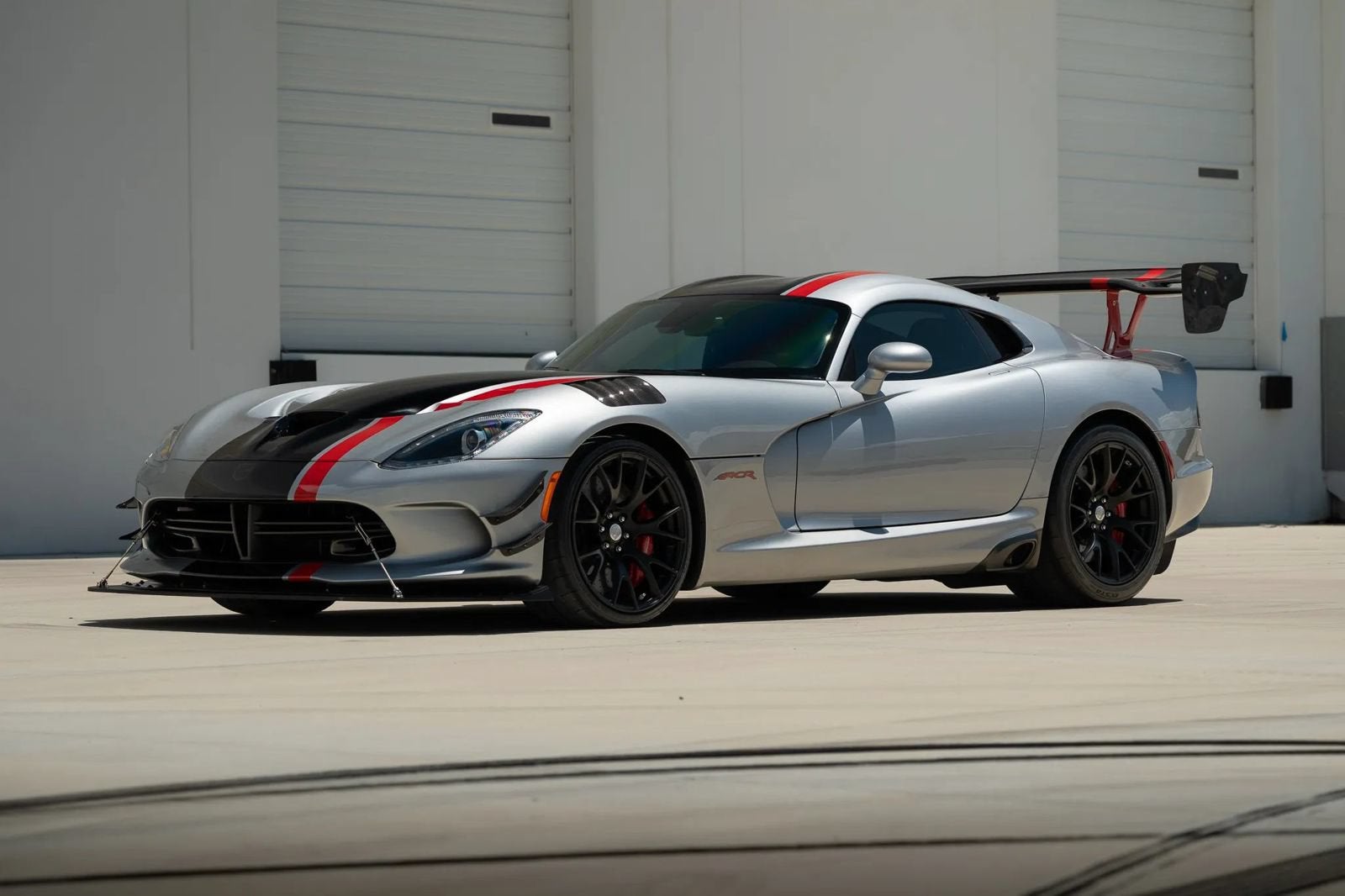
Remembering the Dodge Viper
Some cars are fast. Some cars are famous. And a rare few become legends the moment they show up. The Dodge Viper was one of those. It had a giant V10 under a long, curvy hood, side pipes that could singe your calf and almost no electronic safety nets. For 25 years it was America's raw, unapologetic answer to the world's exotic supercars. The short answer The Dodge Viper was a V10-powered American sports car built in Detroit from 1992 to 2017. It started as a 400-horsepower roadster and finished as a 645-horsepower track weapon, winning at Le Mans, Daytona and the Nürburgring along the way. Just under 32,000 were built across five generations before production ended in August 2017. In this look back, we'll trace the Viper from a bold 1989 concept car to its final, record-setting ACR. We'll cover every generation, its racing victories, the Viper-powered pickup truck that shocked the truck world and why production finally ended. And for Lee's Summit and Kansas City drivers who still crave that kind of Dodge performance, we'll show you where the Viper's spirit lives on in today's Dodge lineup. Born From a Bold Idea The Viper story starts in the late 1980s, when Chrysler was looking for something to get people excited about the brand again. Chrysler president Bob Lutz suggested a modern take on the legendary Shelby Cobra: a simple, brutally powerful two-seat roadster with a huge engine and not much else. Designer Tom Gale and the Chrysler Design Center turned the idea into a clay model, and the concept car debuted at the 1989 North American International Auto Show in Detroit. The reaction was overwhelming. People wanted Chrysler to build it, and Chrysler listened. Chief engineer Roy Sjoberg assembled a small group of about 85 engineers, nicknamed "Team Viper," to turn the concept into a production car. Chairman Lee Iacocca gave the program official approval in May 1990. The V10 with a Lamborghini connection The heart of the Viper was its engine: an 8.0-liter V10. At the time, Chrysler owned Lamborghini, and the Italian supercar maker helped design the engine, including casting an aluminum prototype block. The engine was based on Chrysler's V8 architecture but reworked into a large, high-torque aluminum V10. It became one of the most recognizable engines in American performance history. The Viper Timeline at a Glance 1989: The Viper concept debuts at the North American International Auto Show in Detroit. 1990: Chrysler approves production. 1991: Pre-production Vipers pace the Indianapolis 500. 1992: The first RT/10 roadsters reach customers. 1996: The GTS coupe arrives and paces the Indy 500. 1998–2000: The Viper GTS-R wins its class at Le Mans three years in a row. 2000: The Viper GTS-R wins the 24 Hours of Daytona overall. 2003: The redesigned Viper SRT-10 debuts with 500 horsepower. 2004: The Viper-powered Ram SRT-10 pickup goes on sale. 2008: The V10 grows to 8.4 liters and 600 horsepower. 2010: Fourth-generation production ends. 2013: The Viper returns as the SRT Viper with 640 horsepower. 2015: It becomes the Dodge Viper again, with 645 horsepower. 2017: Production ends, and the Conner Avenue plant closes on August 31. The Five Generations of the Viper Over 25 years, the Viper went through five generations. Each one got more powerful and more capable, but every one stayed true to the original idea: a big V10, rear-wheel drive and a focus on the driver. Generation Years Engine Horsepower Highlights 1st 1992–1995 8.0L V10 400 hp RT/10 roadster 2nd 1996–2002 8.0L V10 415–450 hp GTS coupe, first ACR 3rd 2003–2006 8.3L V10 500 hp SRT-10 roadster and coupe 4th 2008–2010 8.4L V10 600 hp SRT-10 ACR 5th 2013–2017 8.4L V10 640–645 hp SRT Viper, Dodge Viper GTC and ACR First generation (1992–1995): The RT/10 Pre-production Vipers paced the 1991 Indianapolis 500 with Carroll Shelby himself at the wheel of one, and the first retail cars reached customers in January 1992. The RT/10 roadster was famously bare-bones. It had no exterior door handles, no roll-up windows (just zip-in side curtains), no anti-lock brakes and, at first, air conditioning only as a dealer-installed option. What it did have was 400 horsepower, enormous torque and side-exit exhaust. It was a car you had to respect, and drivers loved it for exactly that reason. Second generation (1996–2002): The GTS coupe In 1996, the Viper got a coupe. The GTS, with its iconic "double-bubble" roof and blue paint with white racing stripes, became one of the most recognizable American cars of the decade. It paced the Indianapolis 500 in 1996, and its V10 made 450 horsepower. The coupe added real windows, and this generation brought more comfort and safety features, including airbags and, by 2001, anti-lock brakes, while keeping the Viper's wild personality. In 1999, Dodge introduced the first ACR (American Club Racer) package for drivers who wanted to take their Viper to the track. Production moved to Detroit's Conner Avenue Assembly Plant in 1995, where Vipers would be hand-assembled for the rest of the car's life. Third generation (2003–2006): The SRT-10 The redesigned Viper SRT-10 brought sharper, more modern styling and a bigger 8.3-liter V10 rated at 500 horsepower. The roadster came first, followed by a new SRT-10 coupe. The name reflected Chrysler's Street and Racing Technology (SRT) performance group, which developed Dodge's most extreme vehicles. Fourth generation (2008–2010): 600 horsepower For 2008, the V10 grew to 8.4 liters and jumped to 600 horsepower. The SRT-10 ACR returned as a serious track car with aggressive aerodynamics, adjustable suspension and lighter weight. In 2011, a fourth-generation ACR set a Nürburgring lap time of 7:12.13, one of the fastest production-car laps of its time. Production of this generation ended in July 2010, and for a couple of years it looked like the Viper might be gone for good. Fifth generation (2013–2017): The comeback The Viper returned for 2013 as the SRT Viper, with a stiffer chassis, a more refined interior and 640 horsepower. For the first time, the Viper got modern electronic stability control and traction control. In 2015, it was renamed the Dodge Viper and gained 5 more horsepower, for 645 horsepower and 600 lb-ft of torque. Dodge said the V10 delivered the most torque of any naturally aspirated sports car engine in the world. The final Viper ACR, with its optional Extreme Aero Package producing roughly one ton of downforce at top speed, became a record-setting track monster. Dodge says it held 13 road-course lap records certified by the Sports Car Club of America. The Viper on the Racetrack The Viper wasn't just fast on paper. It proved itself at the biggest endurance races in the world. Le Mans: The Viper GTS-R, run by the French team Oreca, won its class at the 24 Hours of Le Mans in 1998, 1999 and 2000. Daytona: In 2000, a Viper GTS-R won the Rolex 24 at Daytona overall, beating faster prototype race cars across the finish line. Championships: Oreca won the 1999 FIA GT Championship and the 1999 American Le Mans Series GTS title with the Viper. Spa and the Nürburgring: Vipers won the Spa 24 Hours in 2001 and 2002 and took multiple wins at the Nürburgring 24 Hours. A late encore: In 2014, the factory-backed Viper team won the drivers' and teams' championships in the United SportsCar Championship's GT Le Mans class. For a car many people saw as a brute-force muscle machine, the Viper's racing record showed it could win against the most sophisticated sports cars in the world. What It Was Like to Drive a Viper Ask anyone who has driven a Viper, and you'll usually hear the same words: intense, physical and unforgettable. The V10 made huge torque from very low in the rev range, so the car surged forward in almost any gear. Early Vipers had no traction control, which meant the driver's right foot was the only thing managing all that power. On a cold or damp day, that demanded real respect. Every Viper used a manual transmission. There was never an automatic option, which made the Viper feel like a throwback even when it was new. The long hood stretched out in front of you, the seating position was low and the exhaust note was a deep, uneven rumble unlike any V8. Later generations grew far more civilized, with better brakes, modern stability control and comfortable interiors, but they never lost that raw edge. That's a big part of why owners and fans remember the Viper so fondly. It made every drive, even a trip to the grocery store, feel like an event. The Viper-Powered Pickup: The Ram SRT-10 One of the wildest chapters in the Viper story didn't involve a sports car at all. From 2004 to 2006, Dodge sold the Ram SRT-10, a full-size pickup with the Viper's 8.3-liter V10 under the hood. It made 500 horsepower and 525 lb-ft of torque, and early models came with a six-speed manual transmission. It was an outrageous idea, and truck fans still talk about it today. That spirit of putting huge power in a pickup lives on in Ram's performance trucks. If you're curious about how today's Ram lineup compares, see our guide to half-ton vs. three-quarter-ton vs. one-ton trucks. Why the Viper Ended In October 2015, Fiat Chrysler announced the Viper would end production in 2017. The company pointed to slow sales; the Viper was always a niche, expensive car. Industry reports also pointed to a federal safety standard (FMVSS 226) that required side-curtain airbag protection, which would have been very difficult to add to the Viper's design without a major and costly redesign. Dodge gave the Viper a proper send-off with a run of serialized special editions for its final year, many paying tribute to famous Vipers of the past. The last Vipers were built in Detroit, and the Conner Avenue Assembly Plant closed on August 31, 2017. In total, just under 32,000 Vipers were built over the car's life. Why the Viper Still Matters Nearly a decade after the last one was built, the Viper still has a devoted following, and it's easy to see why. It was pure. Big engine, rear-wheel drive, a manual transmission and a long hood. In an age of turbocharged engines and digital everything, that simplicity feels special. It was American. Designed and built in Detroit, the Viper proved an American carmaker could build a world-class supercar. It was a winner. Class wins at Le Mans, an overall win at Daytona and production-car lap records gave it serious credibility. It was rare. With fewer than 32,000 built over 25 years, every Viper is a special sight at a car show or cruise night. You can see that passion right here in the Kansas City area. At local car shows, cruise nights and Cars and Coffee meetups, a Viper still draws a crowd faster than almost anything else in the lot. Longtime fans love telling the story of the first time they heard one start up, and younger enthusiasts who grew up seeing Vipers in video games and posters finally get to see one in person. For many Mopar fans in Lee's Summit and beyond, the Viper is the car that made them fall in love with Dodge in the first place. Low-production, special-edition Vipers, especially early RT/10s, GTS coupes and late ACRs, have become collector favorites. If you own one, keeping it in top shape with regular service, fresh fluids and careful storage helps protect both the driving experience and its value. Thinking about buying a used Viper? If owning a Viper is on your bucket list, a few tips can help you shop smart: Get the service history. Regular fluid changes and documented maintenance matter on a high-performance V10. Check tires and brakes. Performance tires age out even with low miles, and track use can wear brakes and suspension quickly. Look for track wear and modifications. Aftermarket parts aren't automatically bad, but they can affect reliability and value. Have it inspected. A pre-purchase inspection by a technician who knows Dodge performance cars is money well spent. Check for open recalls by VIN on the NHTSA website. Fun Viper Facts The original RT/10 didn't have exterior door handles. You opened the doors from the inside. Early Vipers used zip-in side curtains instead of roll-up windows, and factory air conditioning didn't arrive until 1994. The famous blue-and-white GTS coupe paced the Indianapolis 500 in 1996. The 2017 Viper could be built in so many combinations that Dodge said there were more than 50 million possible configurations for the GTC and ACR. The Viper's V10 shared DNA with a Lamborghini engineering effort, a connection few American sports cars can claim. Where the Viper's Spirit Lives Today There's no new Viper on sale today, but the attitude that made it great is very much alive in the Dodge lineup. If you love big power and bold design, these are the vehicles to know: Dodge Charger The new Charger carries Dodge's muscle-car legacy into a new era. For 2026, the gas-powered Charger is available with the twin-turbo Hurricane Sixpack inline-six, making 420 horsepower in the R/T and 550 horsepower in the Scat Pack. There's also the all-electric Charger Daytona for drivers who want instant electric torque. Like the Viper, the Charger is built around the idea that driving should be exciting. It also adds things the Viper never offered, like a usable back seat, a big hatchback cargo area and available all-wheel drive, so you can enjoy Dodge performance all year round, even through a Kansas City winter. Dodge Durango SRT Hellcat If you need room for the family but still want to feel something every time you press the gas, the Durango SRT Hellcat is a three-row SUV with a supercharged HEMI V8. For 2026, Dodge rated the Durango SRT Hellcat Jailbreak at 710 horsepower. It's about as close as you can get to Viper-level thrills with seating for up to seven. The Jeep Wrangler 392 It's not a Dodge, but if you want a big, naturally aspirated engine with a wild personality, the HEMI V8-powered Wrangler 392 is worth a look. Read our guide, What Is the Jeep Wrangler 392?, to learn more. Want more Mopar history? Read our look back at Dodge's great muscle cars. Frequently Asked Questions What years was the Dodge Viper made? The Viper was built from 1992 to 2017, with a short break after the fourth generation ended in 2010. It returned for the 2013 model year and ended production in August 2017. How much horsepower did the Dodge Viper have? The first Viper RT/10 made 400 horsepower from an 8.0-liter V10. The final Dodge Viper made 645 horsepower and 600 lb-ft of torque from an 8.4-liter V10. Did Lamborghini design the Viper engine? Lamborghini, which Chrysler owned at the time, helped design the Viper's V10 and cast an aluminum prototype engine block. The engine was based on Chrysler V8 architecture. Why did Dodge stop making the Viper? Fiat Chrysler cited slow sales when it announced the end of the Viper. Industry reports also pointed to a federal side-curtain airbag safety standard that would have been difficult to meet without a costly redesign. How many Dodge Vipers were made? Just under 32,000 Vipers were built across five generations from 1992 to 2017. Did the Viper ever win Le Mans? The Viper GTS-R won its class at the 24 Hours of Le Mans three years in a row, in 1998, 1999 and 2000. It also won the 24 Hours of Daytona overall in 2000. What does ACR stand for on the Viper? ACR stands for American Club Racer. It was Dodge's track-focused version of the Viper, with upgraded suspension, aerodynamics and brakes for drivers who wanted to race or take the car to track days. Where was the Dodge Viper built? Every Viper was built in Detroit. Early cars came from the New Mack Avenue plant, and from 1995 until the end of production in 2017, Vipers were assembled at the Conner Avenue Assembly Plant. Will Dodge bring back the Viper? Dodge hasn't announced a new Viper. For now, the Charger and Durango SRT Hellcat carry on Dodge's high-performance spirit. Feel Dodge Performance at McCarthy CDJR The Viper proved that Dodge knows how to build something unforgettable, and that tradition continues today. Whether you're shopping for a new Charger, a Durango SRT Hellcat or a certified pre-owned Dodge performance car, the team at McCarthy Jeep Ram Chrysler Dodge in Lee's Summit would love to help you find your next thrill. We'll walk you through the options, set up a test drive and make the buying process easy. We're located at 1051 SE Oldham Parkway in Lee's Summit, just off US-50, serving drivers from Blue Springs, Raymore, Independence, Belton, Grain Valley, Greenwood, Overland Park and across the Kansas City metro. Browse our Dodge inventory or call us at (816) 441-5389 to schedule a test drive. Shop Dodge Inventory